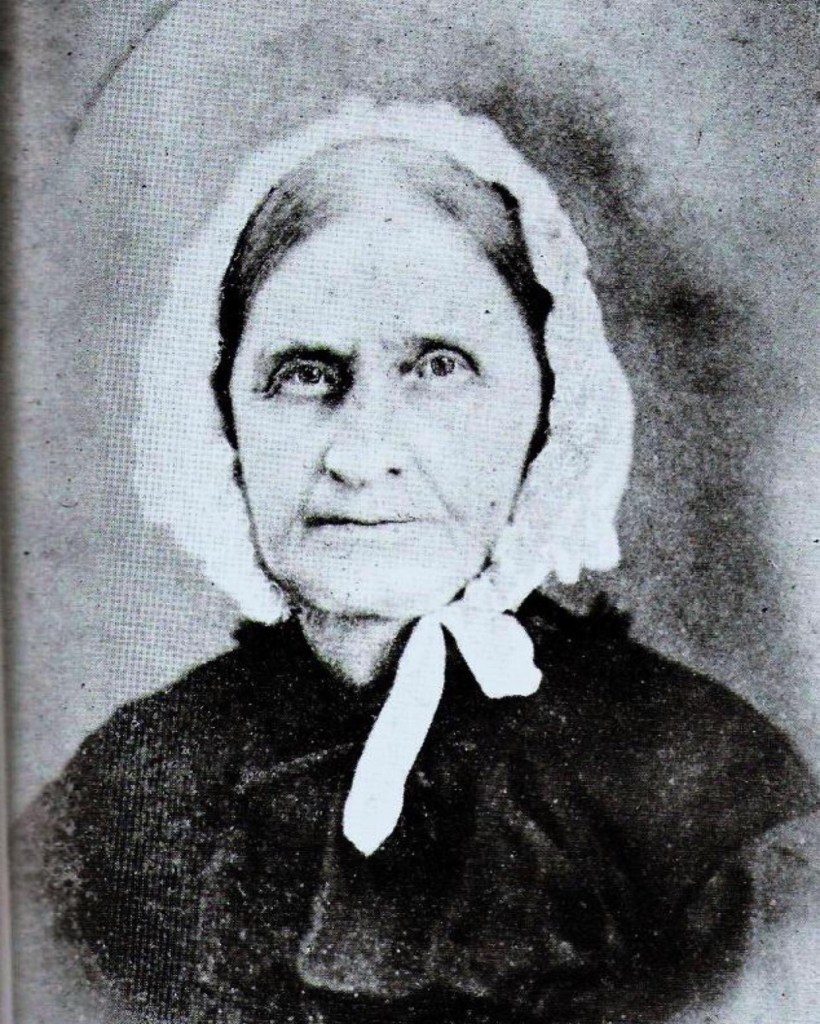
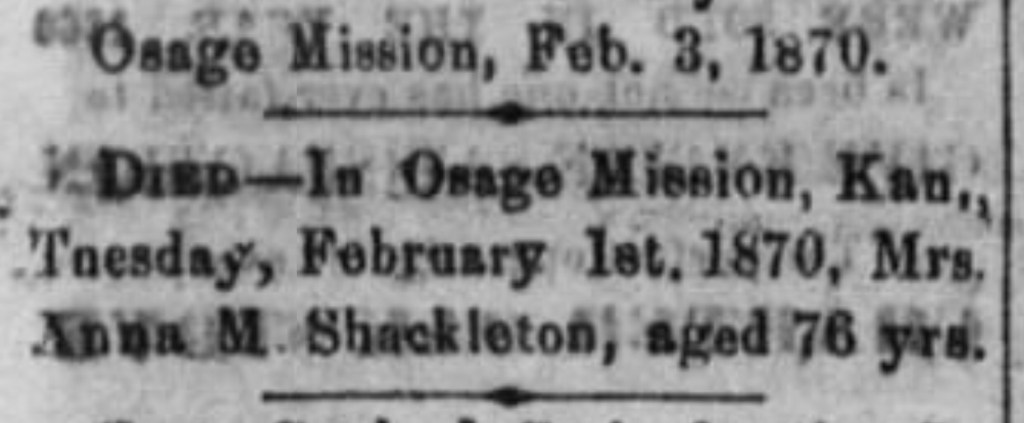
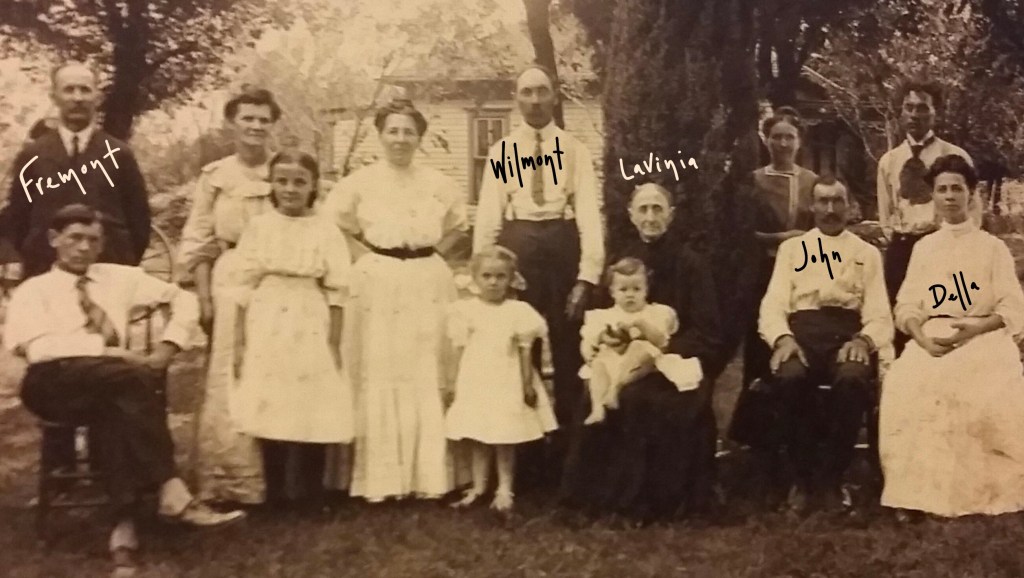
My ancestors immigrated to Kansas in 1869, settling in Osage Mission, KS. (Now St. Paul, KS.) Born on Dec 13 1794 in New Jersey was my 4x great grandmother Anny Maria. Her grandfather, Johann George Windemuth, was the emigrator who came to the US from Germany in 1736 with his father. Landing in Philadelphia they would eventually make home in New Jersey. In 1813 Anny married John Ogden Shackelton in New Jersey and together they had 9 children. In 1852 John Ogden died, leaving Anny a widow. After his death Anny went to live with her son Benjamin (my 3x great grandfather) in Illinois in about 1863. Benjamin was the oldest of the siblings so its assumed this is why he carried out this task. Anny’s youngest child, John O. JR died Jan 23, 1862 from typhoid fever which he had been battling for 6 weeks while serving in the civil war. He would have been around 24 years of age at the time of his death. We believe that John’s death while serving in the civil war is why our family was offered land in Kansas. Benjamin’s 11 year old son, Fremont, moved with Anny and his father to Kansas from Illinois along with his other siblings, Wilmont, Della and John. They all came in a covered wagon pulled by oxen, which could only travel about 15 miles a day. Shortly after their arrival Anny died at Osage Mission, KS on February 1st of 1870 after sustaining injuries from falling off the wagon during their journey. She was 76 when she died, and until recently the location of her burial has remained a mystery.
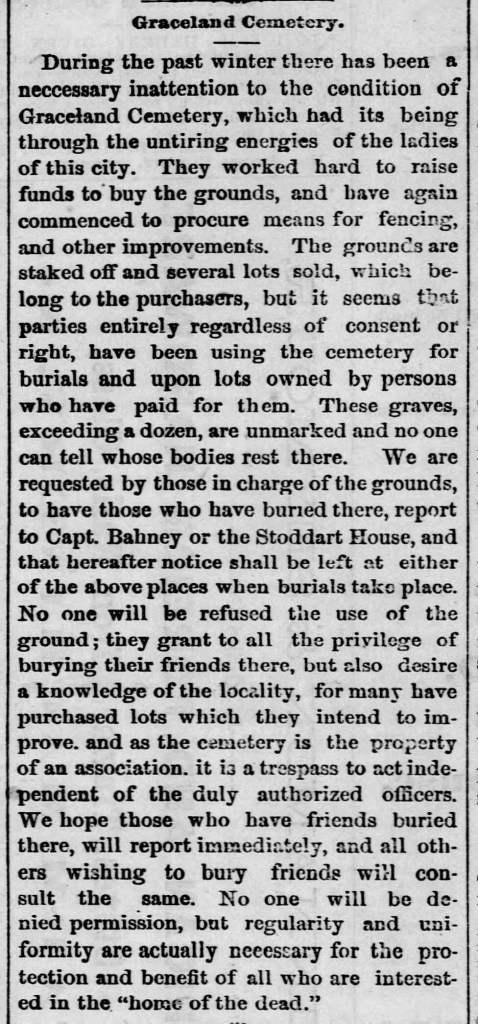
Clipping from The Osage Mission Journal
I would like to thank the Osage Mission Museum in St. Paul, KS for all their help and research in finding Anny’s resting place.
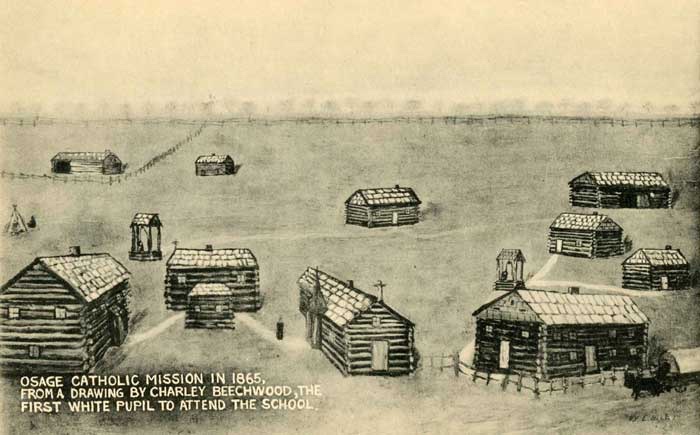
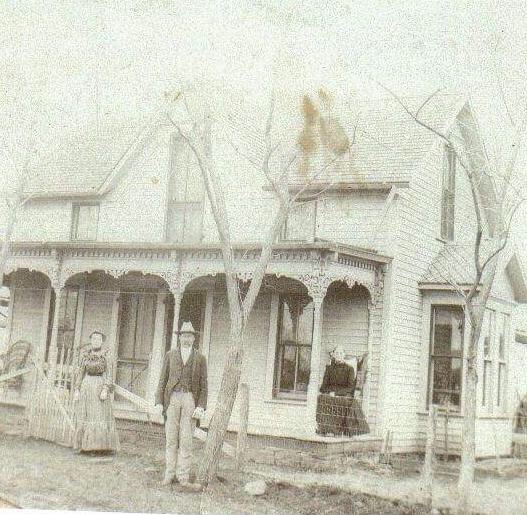
Osage Mission, KS in 1865Shackelton home near Walnut, KS. Benjamin died in 1889 so this photo predates that. I believe his wife Lavinia is sitting in the chair, and possibly daughter Della is on the left, or someone they had hired as help.Shackelton Family. Siblings Fremont, Wilmont, John and Della who all came to Kansas with their father Benjamin and Grandmother Anny. Lavinia was Benjamin’s wife. They married in 1857.
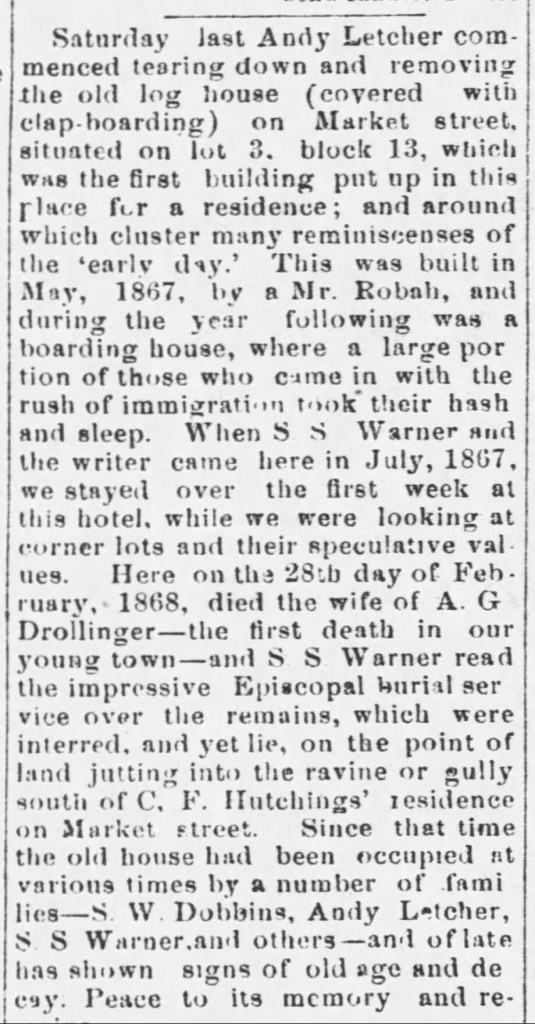
In Osage Mission one of the first locations of burial was Graceland Cemetery. The first burial took place there in 1868. After a few years of being an active cemetery burials stopped in 1874 because the ground was too rocky and difficult to dig graves. About half of those who were at Graceland were eventually reinterred to what is now Hope Cemetery in St. Paul, KS, but the other half (from what we know) still possibly remain at that original location. Its hard to know for sure if those interred there ever had a marker, or if they have always remained unmarked. Thankfully no active farming seems to have taken place on the land, lest they disturb those who still rest there.
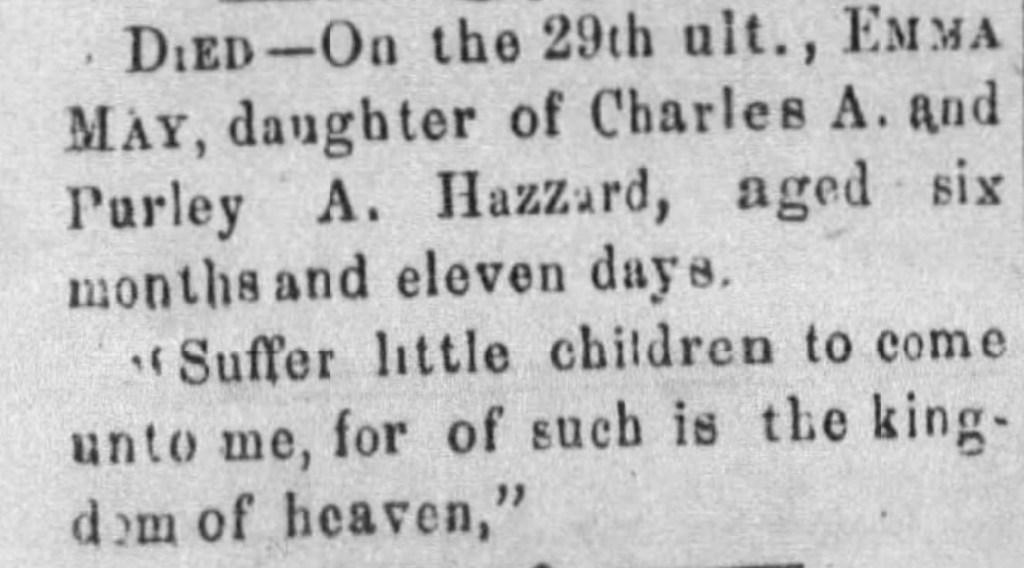
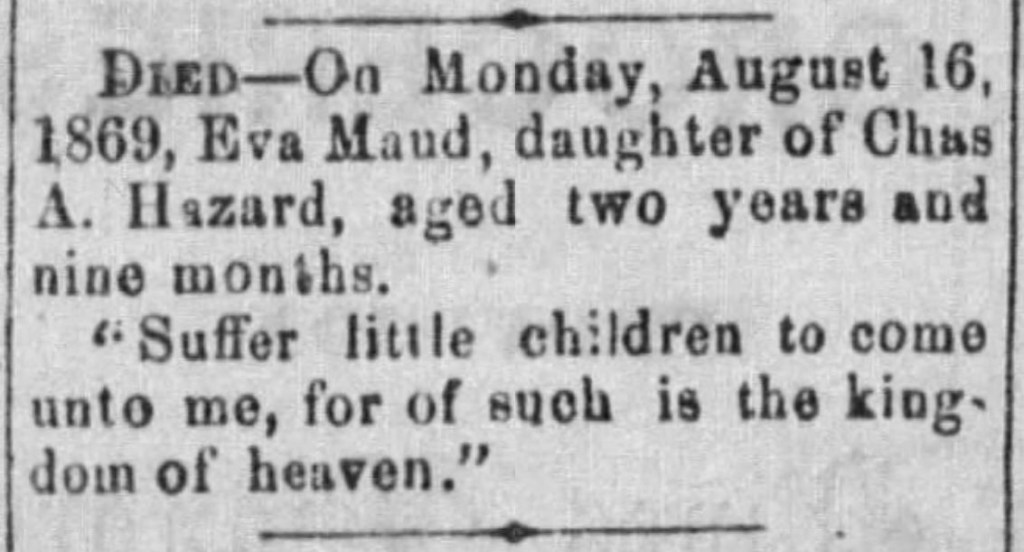
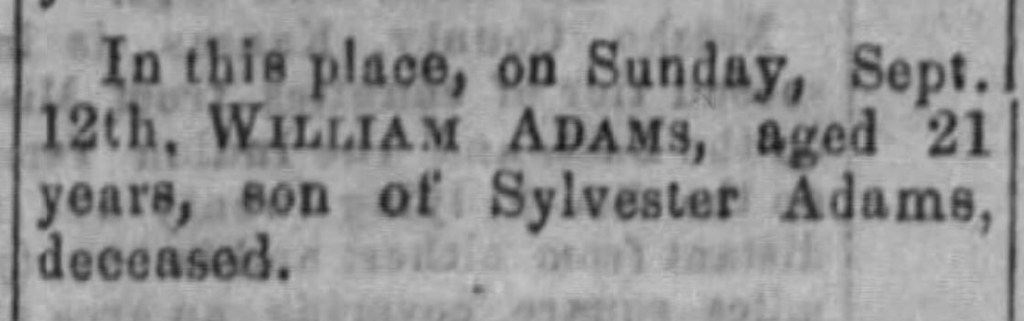
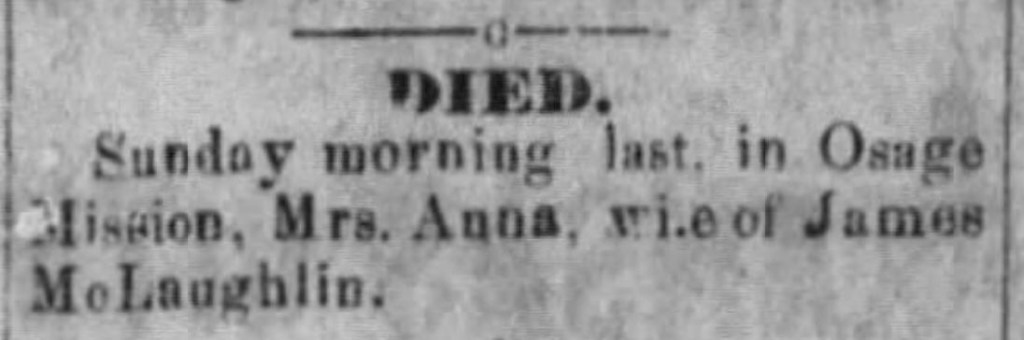
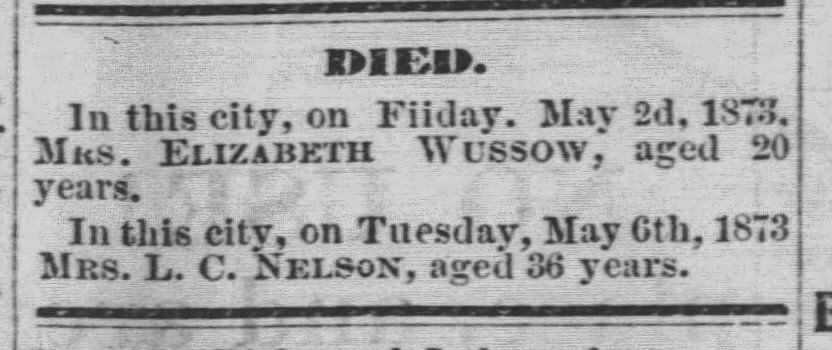
Clipping from Osage Mission Journal, 1873
I did some of my own research to find out more than just the names of who had been buried at Graceland. There were a handful of children buried there, which wouldn’t be uncommon during this time period. Many people buried there who were never reinterred seemed to be people who had no one left to take care of their means or perhaps the family had already moved and relocated to a different town. Ultimately those details will remain unknown.
Below is those who are still at rest at Graceland Cemetery. Today, the land is on private and is not accessible to the public.
You can also view this cemetery on findagrave with the ID# 2769768
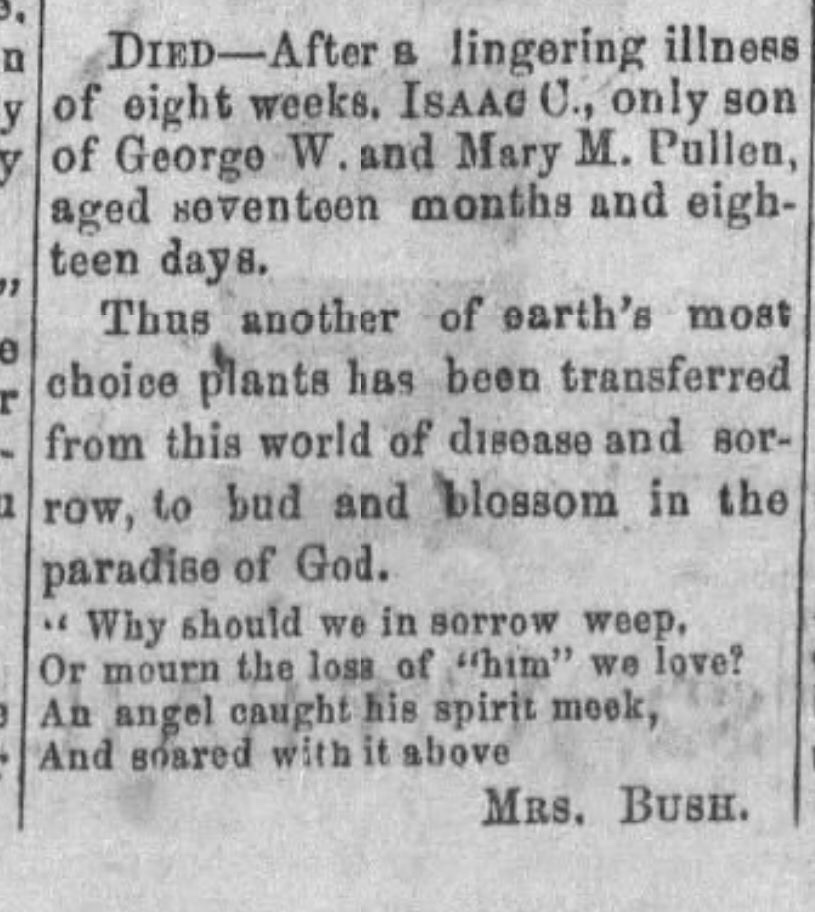
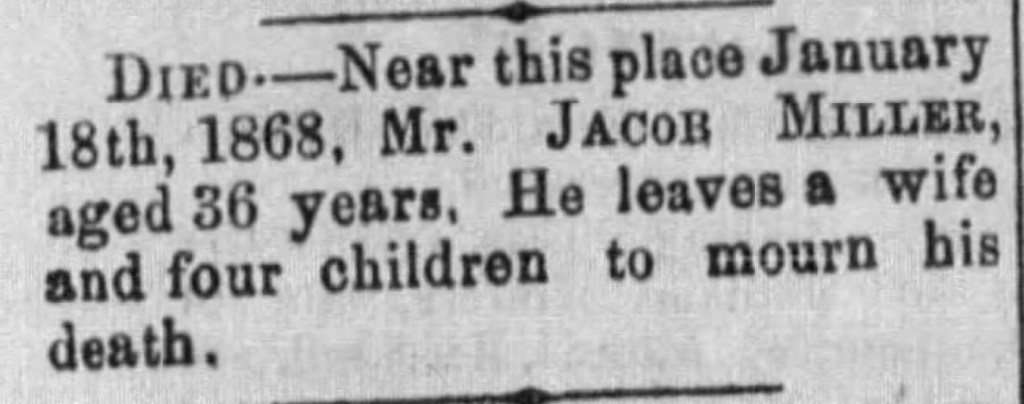
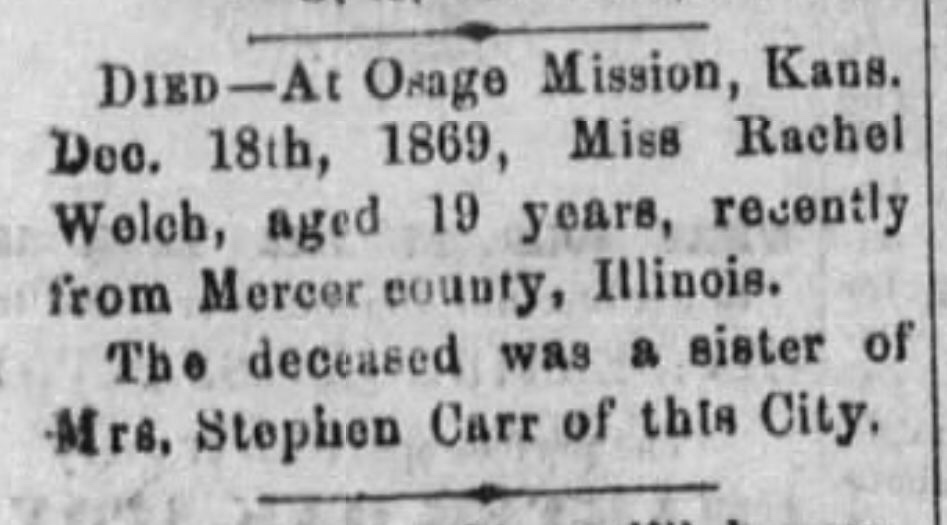
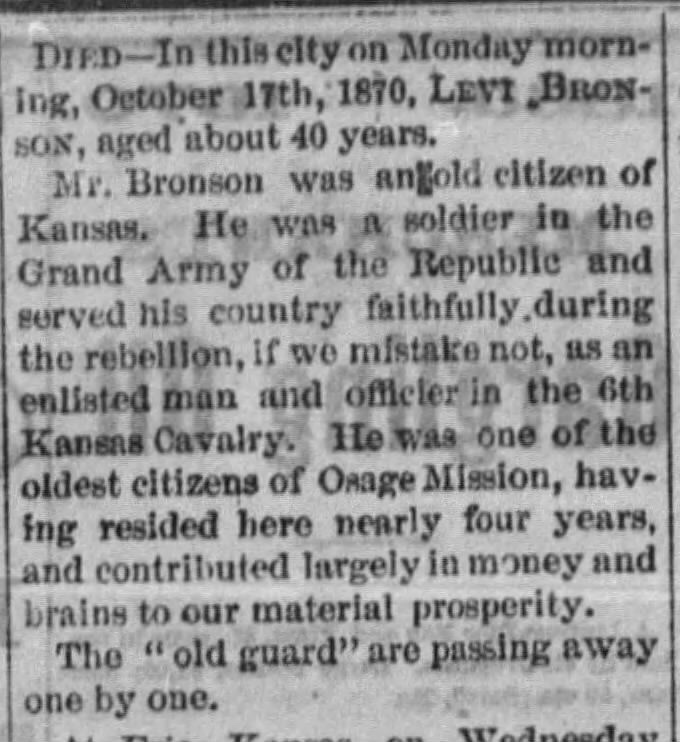
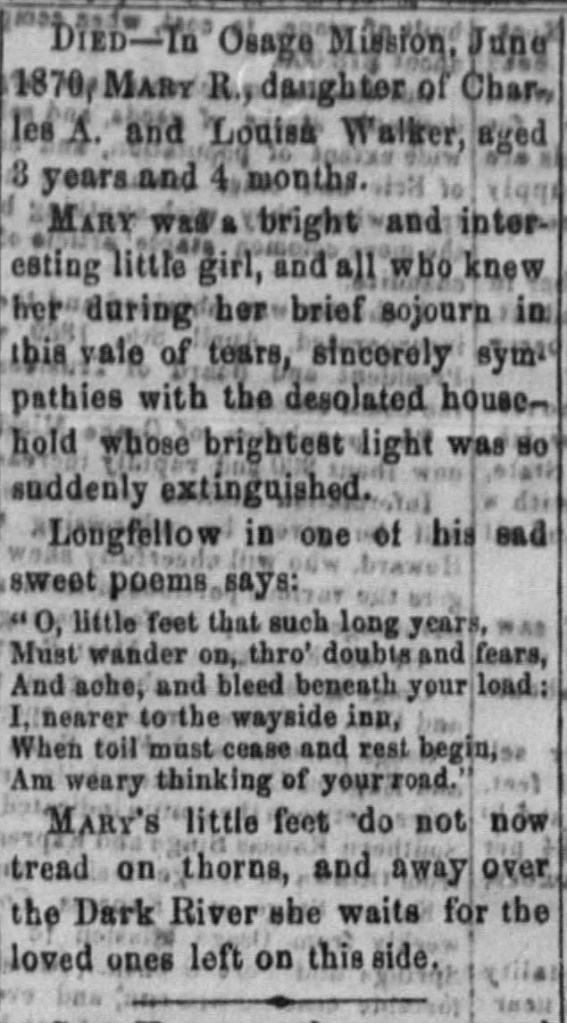
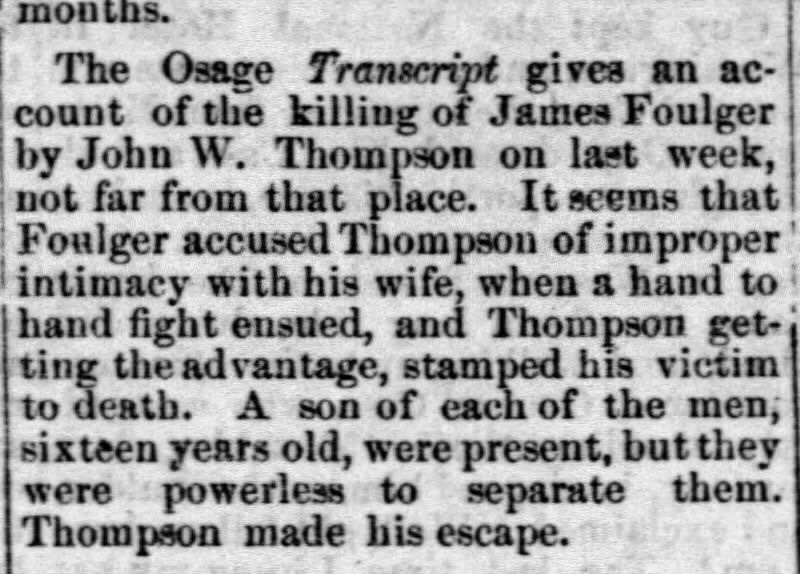
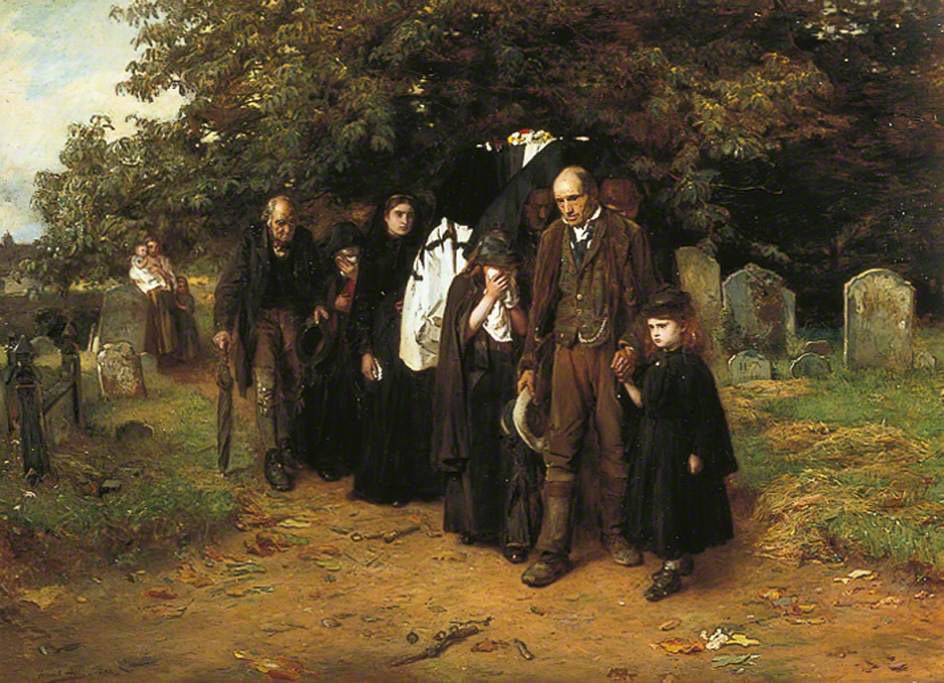
Elizabeth E Drollinger Died 1868Isaac Pullen (infant) Died 1868Emma May Hazzard (infant) Died 1869Eva Maud (Child) Died 1869William Adams Died 1869Anna McLaughlin Died 1869Jacob Miller Died 1869Rachel Welch Died 1869Levi Bronson Died 1870Mary R Walker (Child) Died 1870James Foulger (Murdered) Died 1873Mrs L.C. Nelson Died 1873I am the Resurrection and the Life (The Village Funeral) Frank Holl. 1872
** Content warning. This post contains graphic and detailed topics about death that might be disturbing or triggering to some. Discretion is advised. **
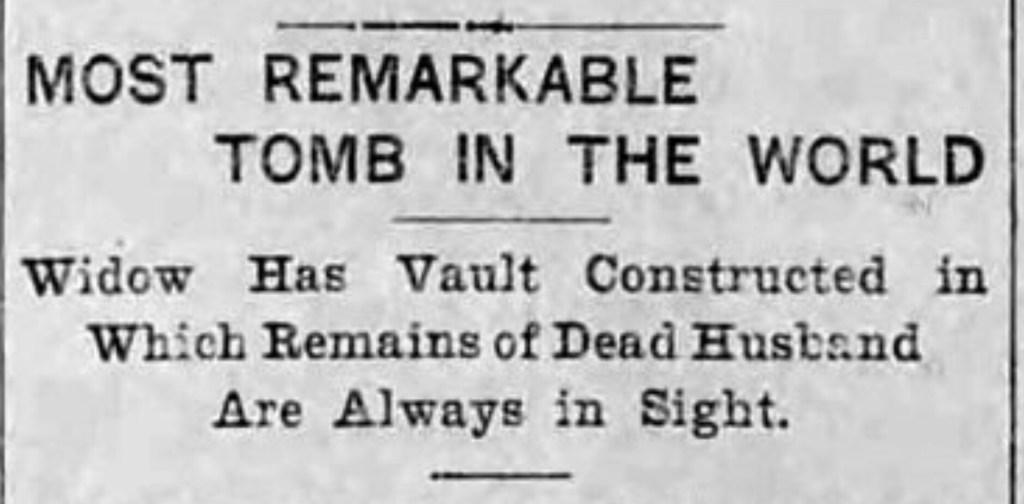
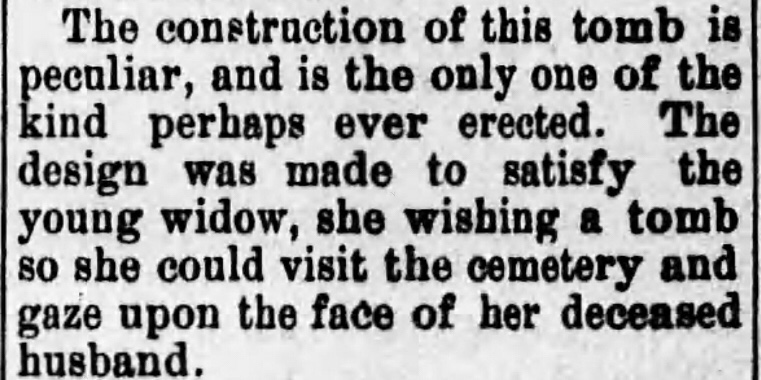
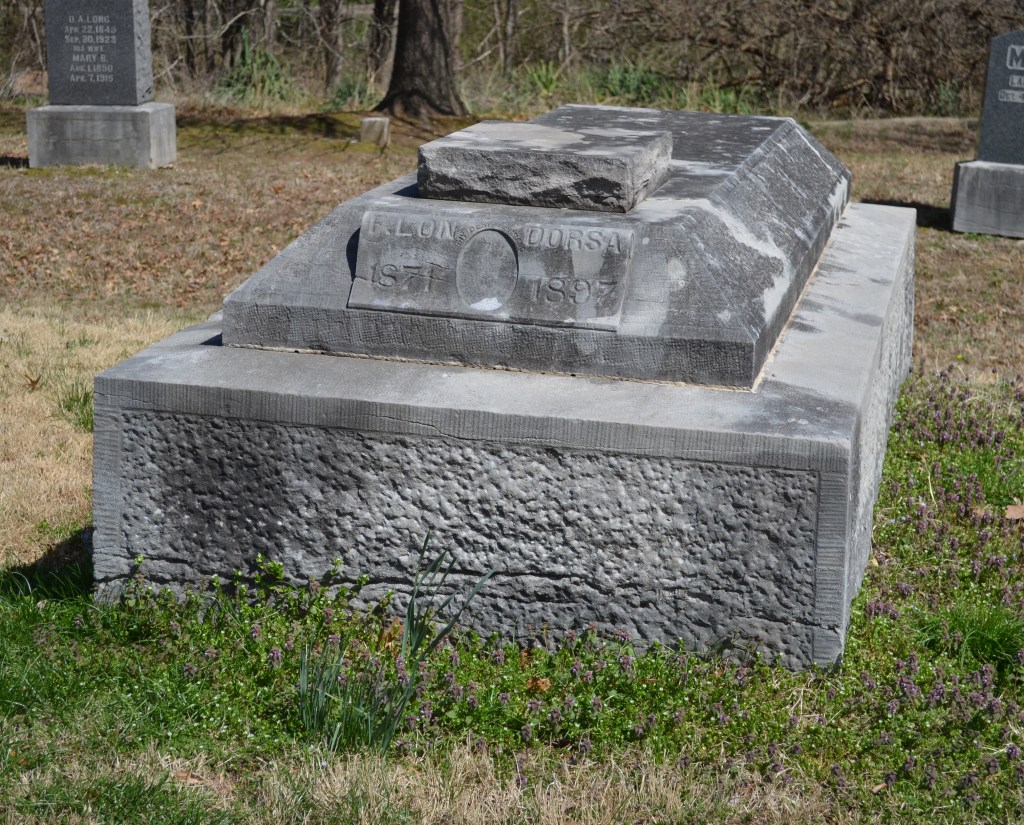
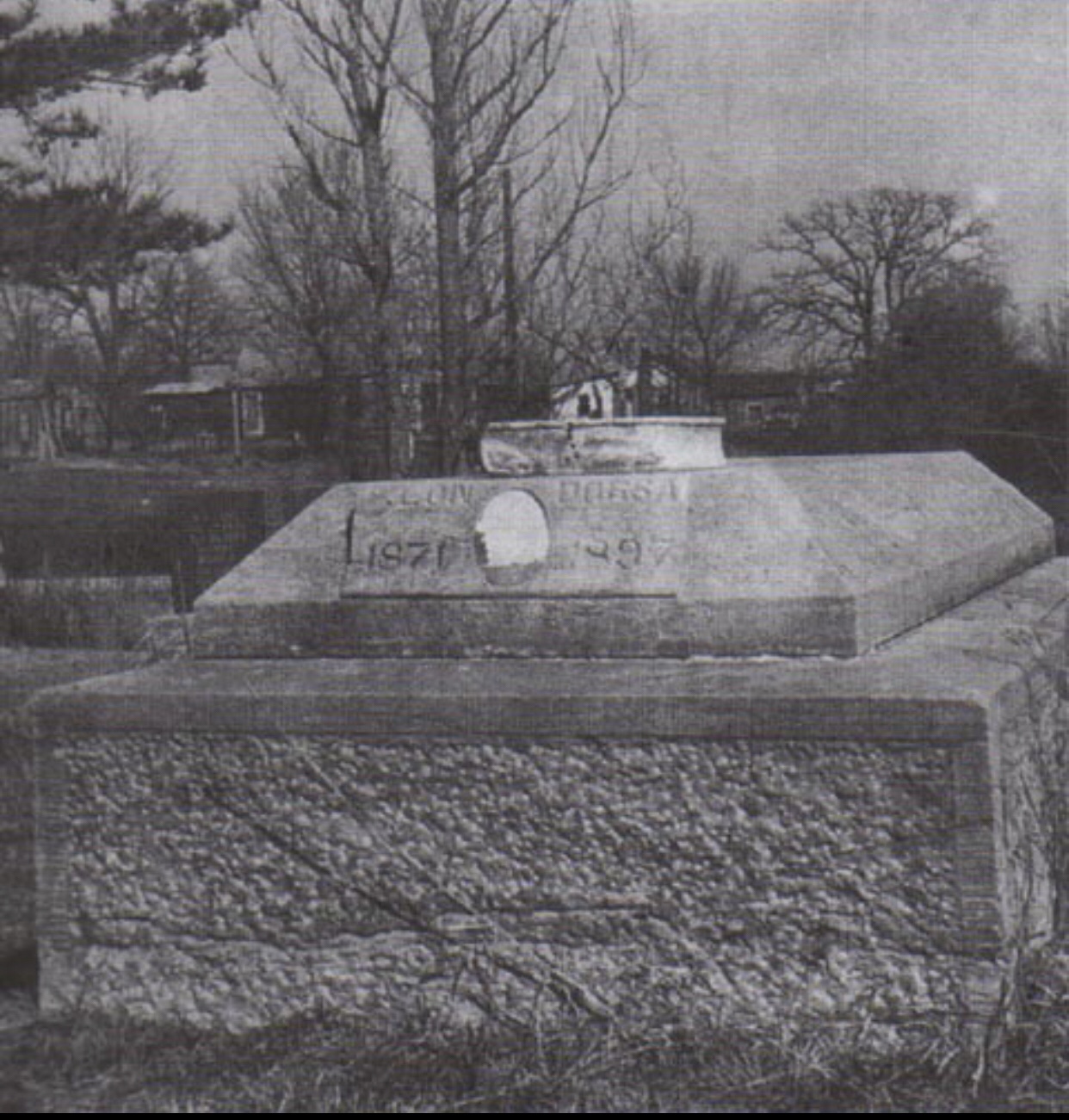
At the age of 26 after being struck by lightning in 1897, the grieving widow of Lon Dorsa, Geneva, longed for her husband and wanted to see him even in death. Lon’s body was discovered by a railroad switch crew the following morning. After working that evening he walked home with his father when the two separated to go their respective ways. Lon was using an umbrella which many suspect was struck first, tearing his trousers to shreds and throwing his hat 10 feet away. His funeral procession was one of the biggest in Nevada, MO. Weeks after his death his body was exhumed, redressed and placed in a large limestone tomb. At the time this type of tomb was quiet unusual. It cost about $900 in 1897 – which would be close to $30,000 in todays dollar. Geneva worked as a seamstress and she must have been working countless hours to be able to afford something so expensive. The stone was shipped in by rail (on its own car, mind you..) where is was worked and chiseled on site by a local stonecutter. It took 32 consecutive days to carve the limestone. An older article states that the tomb measures ‘ten feet long, five feet wide, and five feet tall.’ The monument in person is quiet large but you can tell over the years the land has shifted and swallowed some of it. It is no longer five feet tall, or perhaps some of it was buried deep in the ground. Geneva didn’t stop there with her requests for the tomb. Lon’s coffin was sealed to be airtight with lead, many claiming at the time that this would ‘preserve his body for centuries’ as long as the seal was never broken. The top of the tomb as adorned with a lock and a key to a stone bible that when unlocked and pivoted would reveal a glass window framing Lon’s face. As you can imagine, this sparked many visitors from all over to visit Missouri to view Lon’s grave out of curiosity to see a tomb with these characteristics. (See, tombstone tourists aren’t a new thing!) For years Lon’s body lay undamaged and, for the most post, intact. Eventually Geneva had the lock and key removed, and the Bible was made a permanent part of the tomb by being cemented down. Geneva died in 1945 – it is unsure when the lock was removed from the Bible, but there are people still living today who remember being able to view his body and seeing it through the glass window.
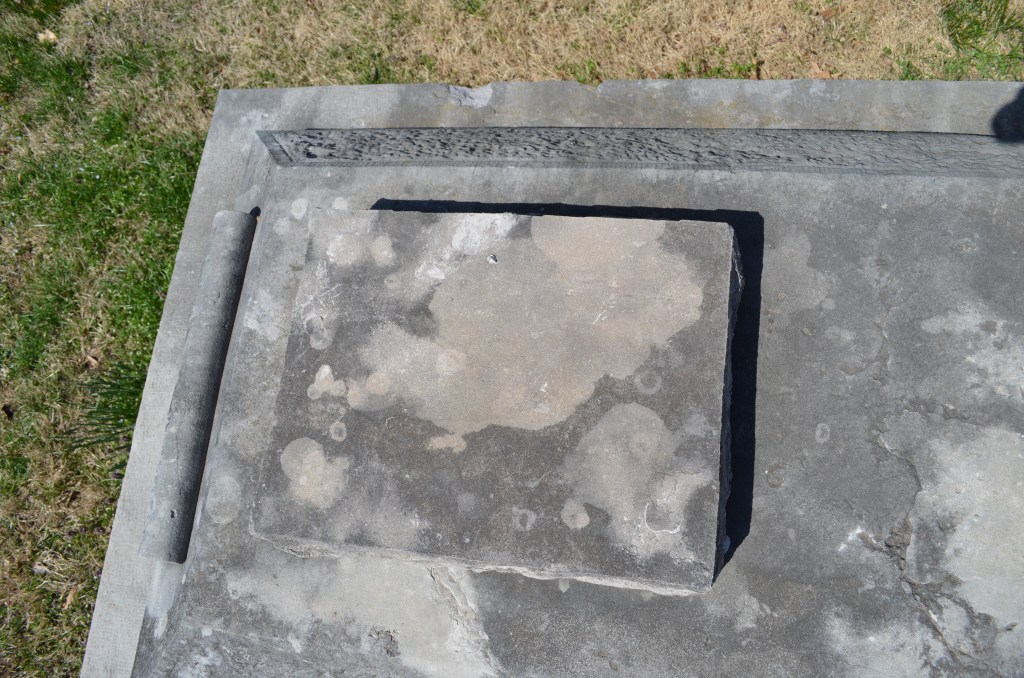
In the right image you can see the Bible affixed ontop of Lon’s grave. Today, it is no longer there and has been replaced with a solid concrete slab. (Left image.)
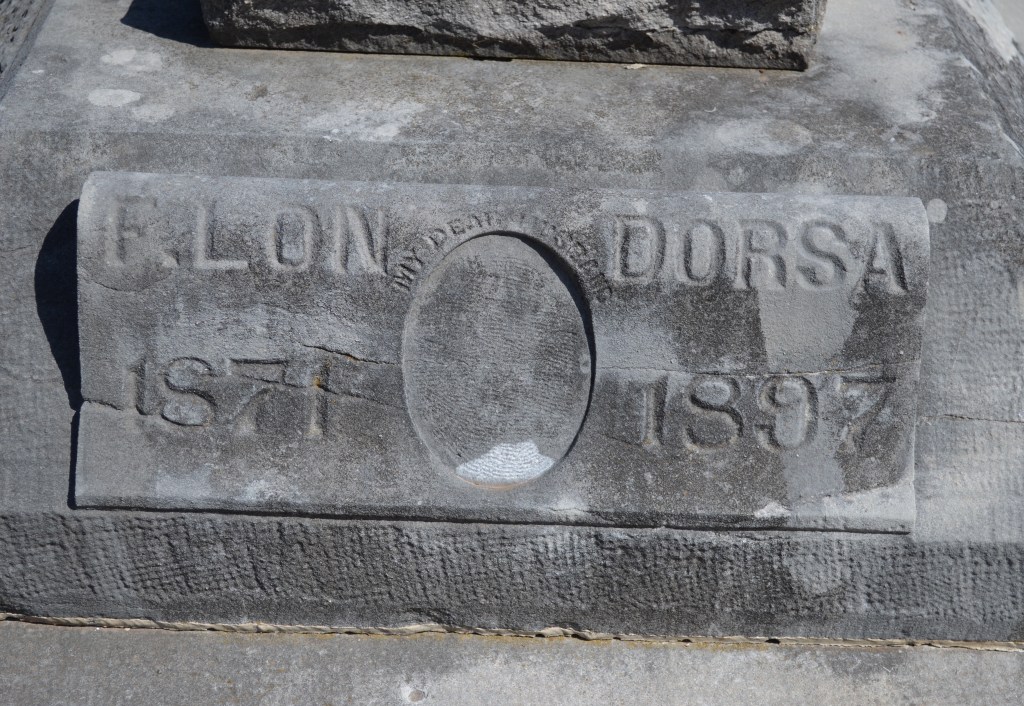
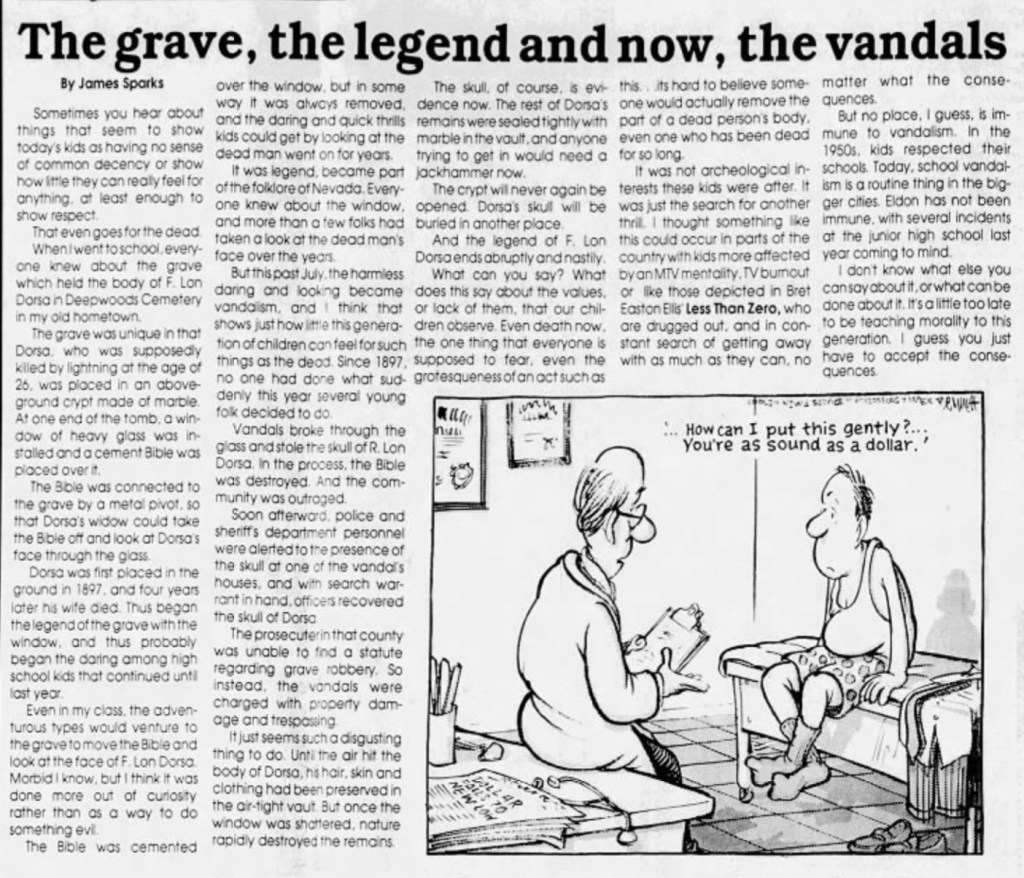
In 1983 vandals pried off the stone bible from the grave, broke the glass that lay over Lon’s coffin and stole his skull. After this happened whatever was left of his body and features decayed instantly once moisture had gotten in. He was probably in some form of being mummified. His skeleton layed open to the elements for quiet some time. The bible was unrepairable, which is where the solid slab of stone was replaced. The police were able to track down Lon’s skull and re-buried it somewhere in the cemetery. Where, no one knows for sure. The oval placed on the front of the grave would have held a porcelain photo of Lon, but it has been gone for some time. Either by vandals or by accident, those can be hard to preserve due to their fragility.
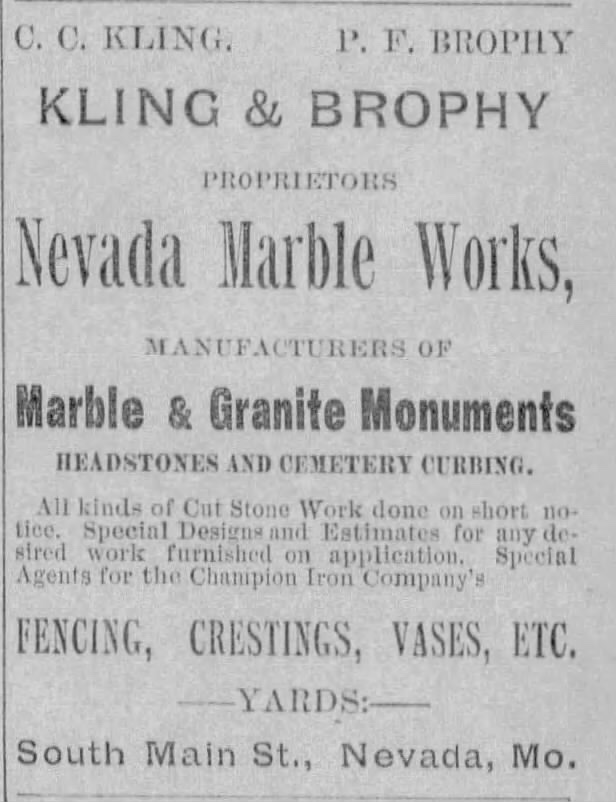
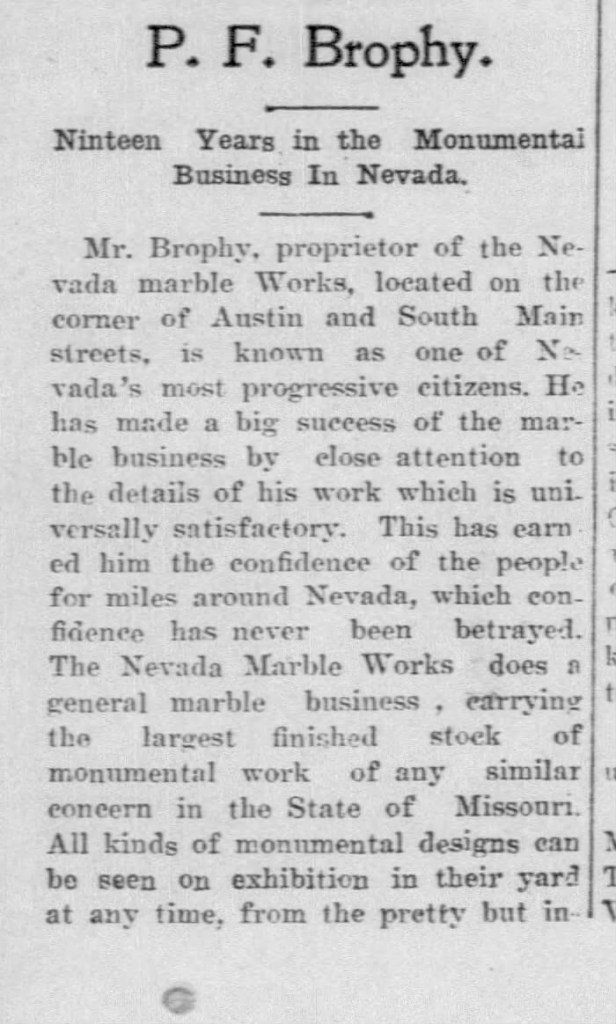
The very top of the tomb, where the Bible would have satArticle after Lon’s skull was stolenThe company that quarried and constructed Lon’s monument
** Content warning. This post contains graphic and detailed topics about suicide and death that might be disturbing or triggering to some. Discretion is advised. **
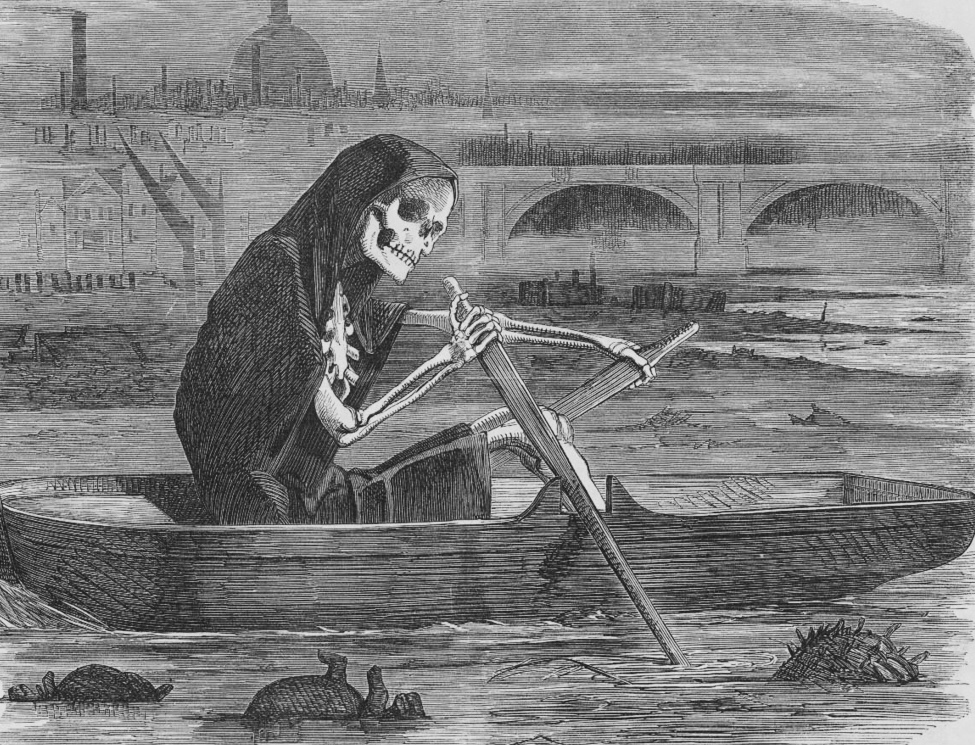
In 1865 Joseph Lister successfully used carbolic acid as a disinfectant to treat wounds and disinfect instruments and other materials during and after medical procedures. This dramatically reduced the amount of patients who would develop gangrene or infection as a result. Before this discovery, the acid was poured into sewers and rivers to reduce foul smells during ‘The Great Stink’ in July of 1858 in London. The warm temperatures of the summer and the untreated human waste caused an increase in a foul smell along the banks of the river Thames. This inspired Lister who believed the acid had germ killing capabilities.
‘The Silent Highway Man’ – 1858, cartoon from publication depicting the great stink.
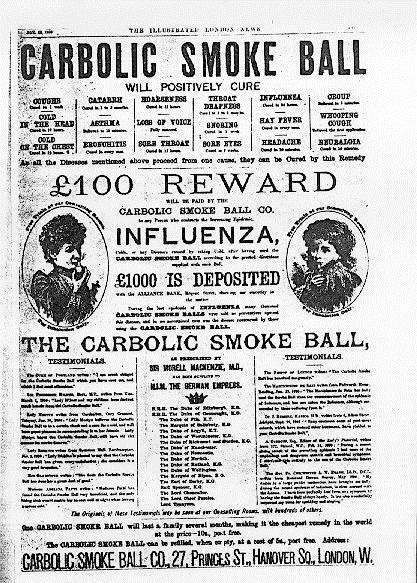
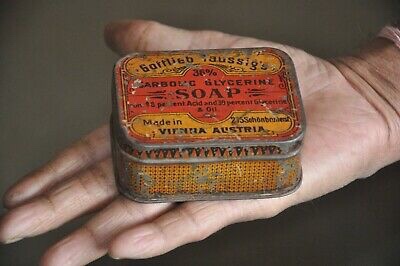
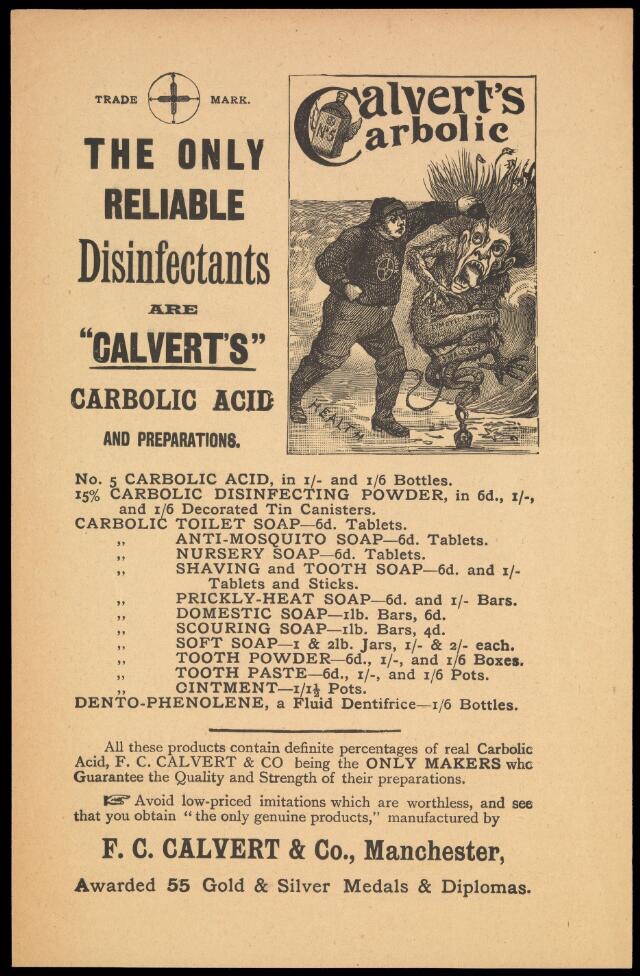
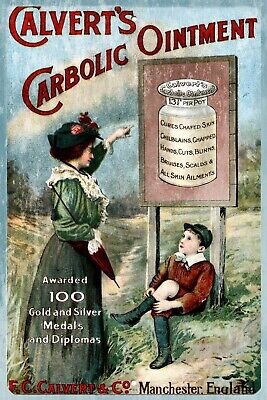
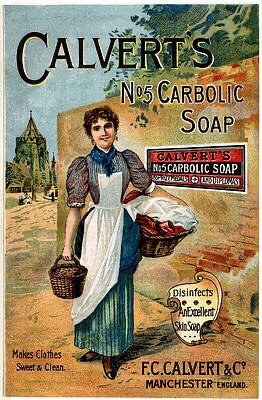
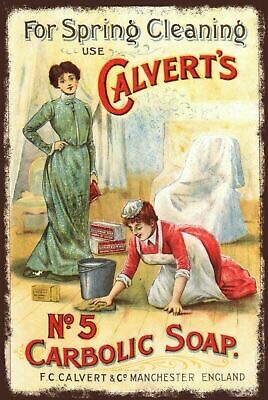
In Victorian times up to the 20th century carbolic acid became a household cleaner. From soaps to mixtures you would dilute yourself to clean floors our laundry – it was easily accessible from any druggist and relatively cheap making it accessible to all classes of people. The discovery of carbolic acid saved many lives in terms of preventing infection of disease, but the easy accessibility led to an increase of accidental poisoning and suicides caused by the chemical. It also caused intense skin damage on surgeons hands and was harmful when inhaled for long periods of time during medical procedures to ‘clean’ the air.
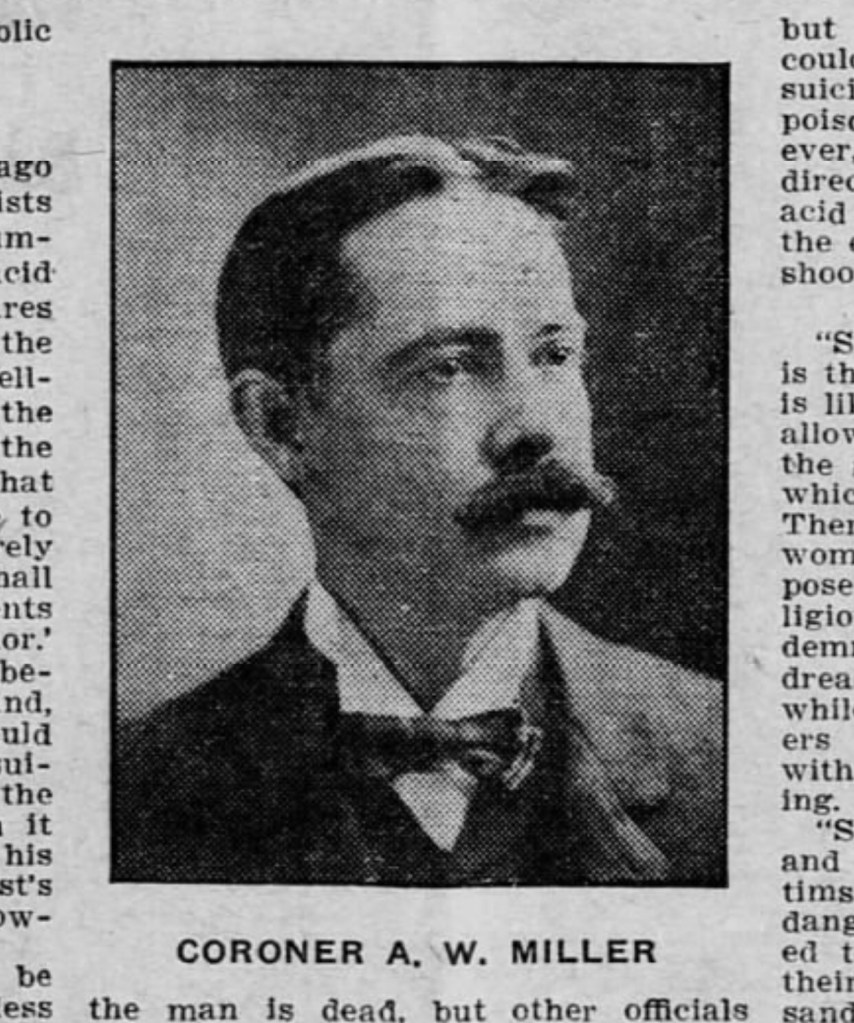
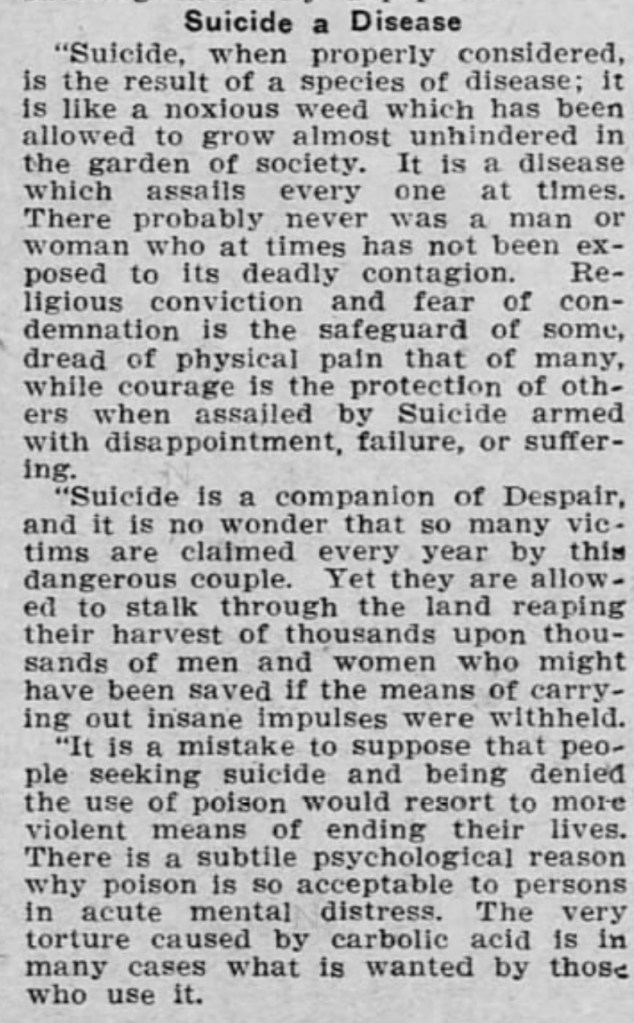
In 1904 an article posted in the Saint Paul Globe (Minnesota) by Coroner A. W. Miller urged concerns claiming carbolic acid was the ‘favorite poison of the despondent ones.’ The town of St. Paul recorded 100 suicides in one year, with half of them being from carbolic acid – either by accidental ingestion or from suicidal intent. Miller commented, ‘If a equal number of deaths was caused by any other agency a general alarm would be sounded, but somehow, no matter how many lives are lost through suicide, no attention is attached. The people who die by carbolic acid are as valuable to the community as those who are victims of white plague, for instance, but no action is taken by the public authorities to check the evil.’ A law was eventually put in place that druggists had to register anyone who purchased the substance and had to ask them what their intentions were with it. They believed this was a way to keep the druggist ‘in check’ for any deaths caused by the chemical. Miller believed that if in the moment of the despondent if they could not obtain the poison they would be given a ‘second chance’ and would decide to not follow through, also believing that even one barrier between the despondent and the poison would help. For the time period it seemed Miller had a reasonable understanding of suicide, depression and those suffering – and seemed to be feeling an immense sense of empathy for those in his community who died as a result from the poison. He wanted regulations put in place.
From The Saint Paul Globe, Published July 17th 1904From The Saint Paul Globe, Published July 17th 1904
The same year, Joplin (Missouri) city Marshall John A. McManamy had a statement about the poison within the community stating that the majority of those who used this method were white women who ‘had fallen from the highest place of moral standing. They are not successful.’ Carbolic acid was agonizing, and if not taken correctly or in a correct amount you could suffer for days in agonizing pain before finally succumbing. For those that survived the poisoning recovering was terrifying and could leave people with long term complications. When taken ‘correctly’ the poison would leave the victim dead minutes later, but sometimes taking up to 1 -2 hours for death to come. It wasn’t until the 1920s that carbolic acid was regulated at a better rate.
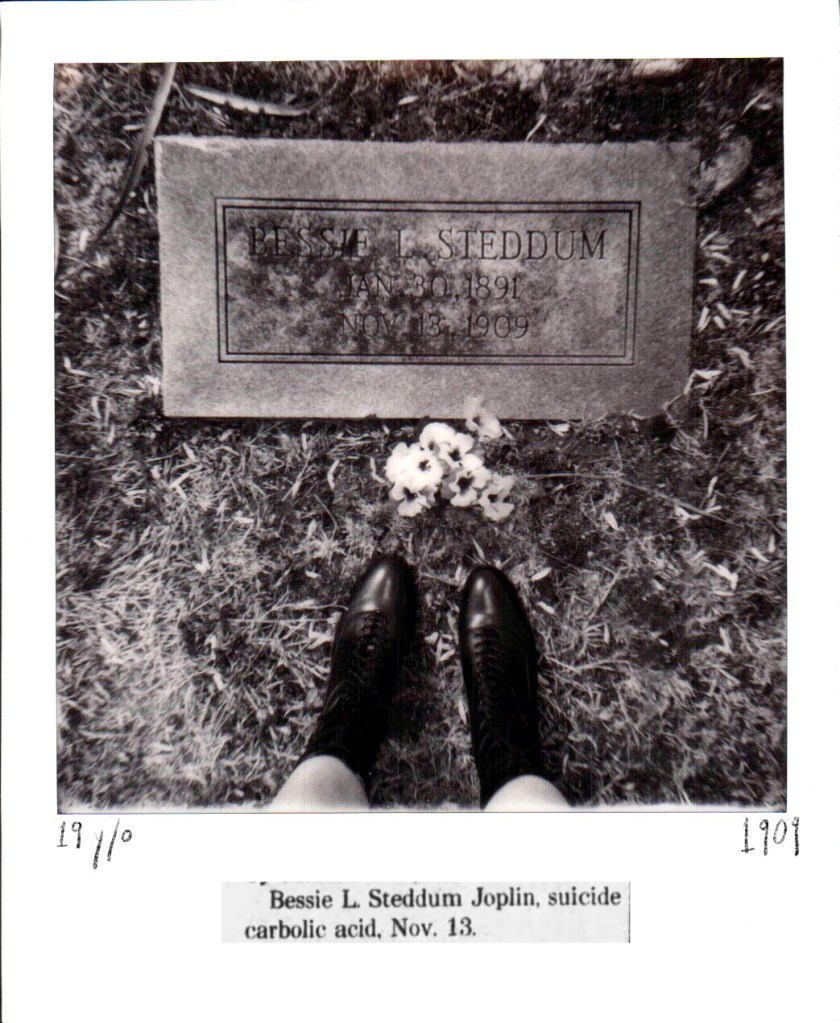
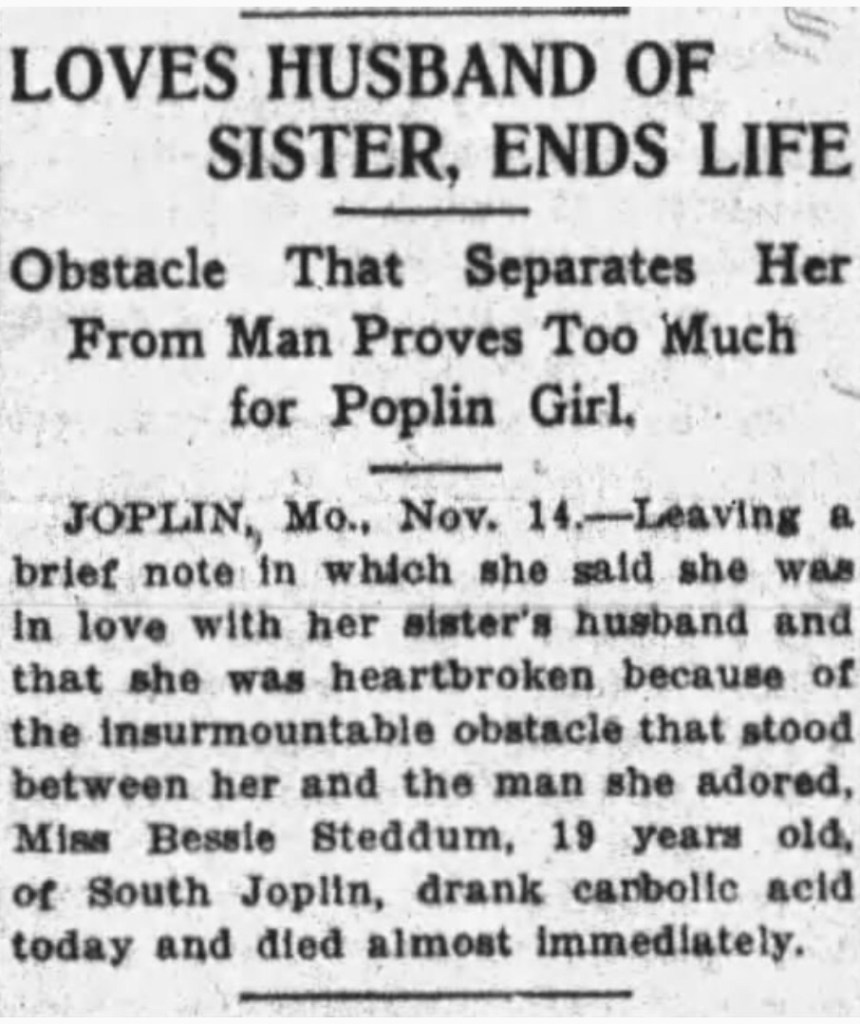
‘Bessie Steddum, 19 years old of south Joplin drank carbolic acid today and died almost immediately.’ She was in love with her sisters husband.
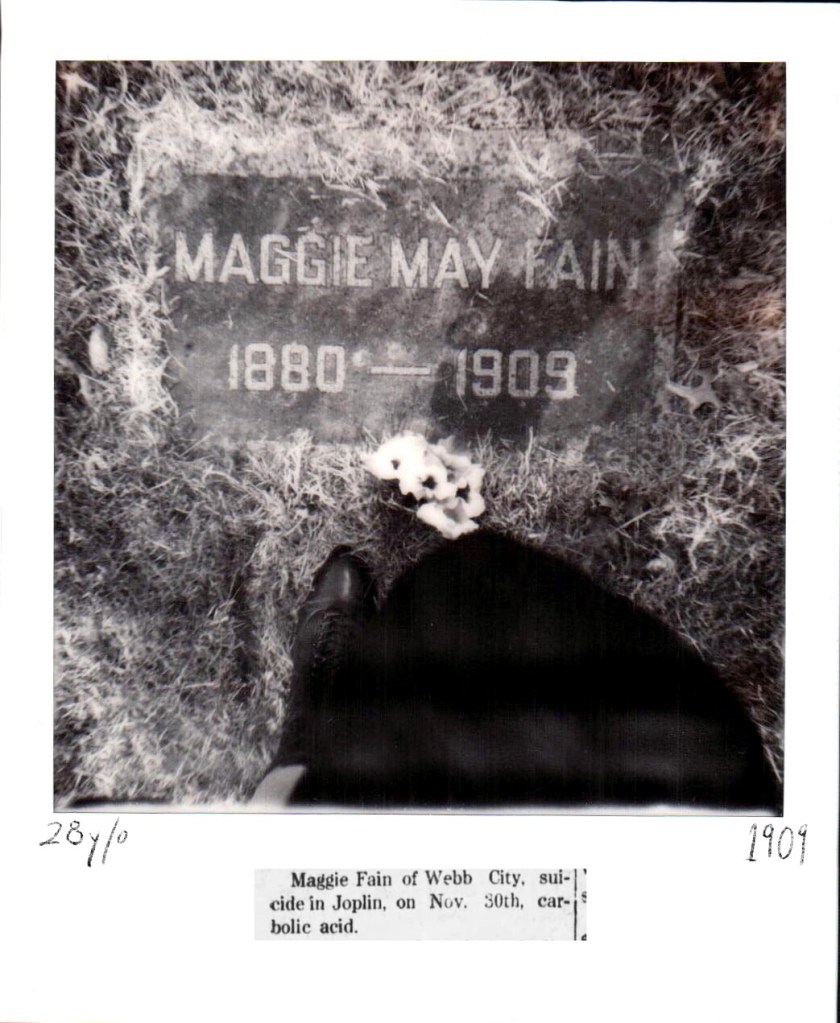
‘Maggie Fain of Webb City, suicide in Joplin on Nov 30th, carbolic acid.’ No other info is known. Motive unknown.
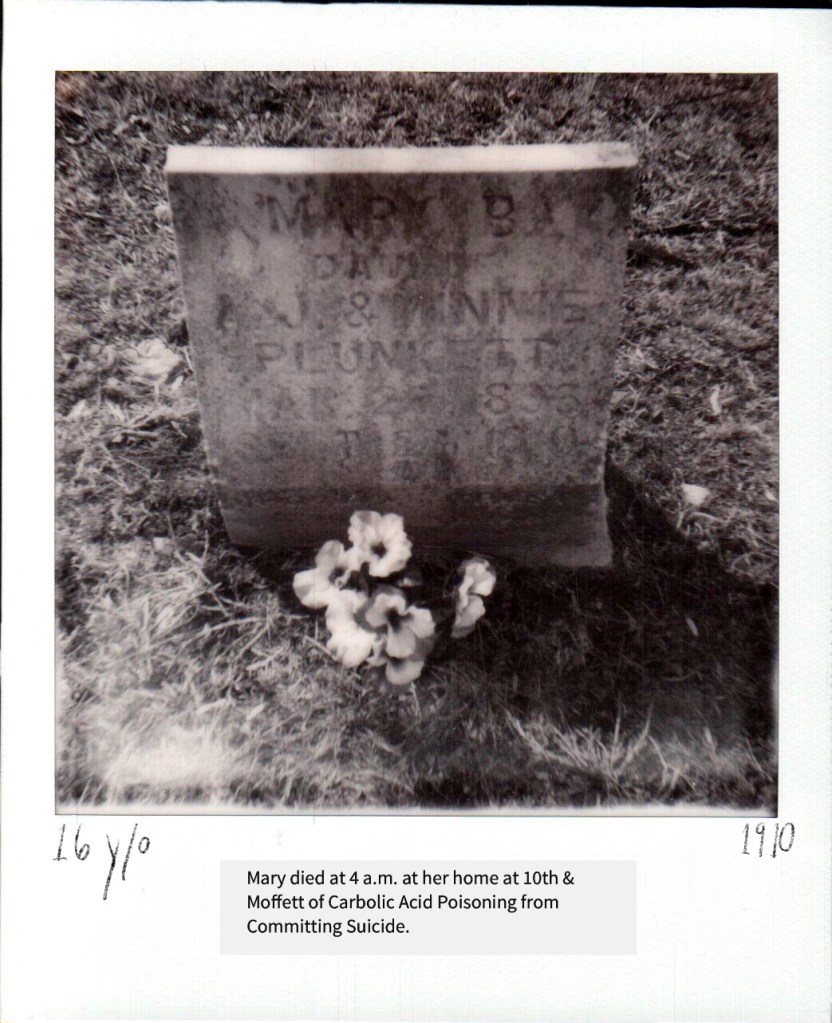
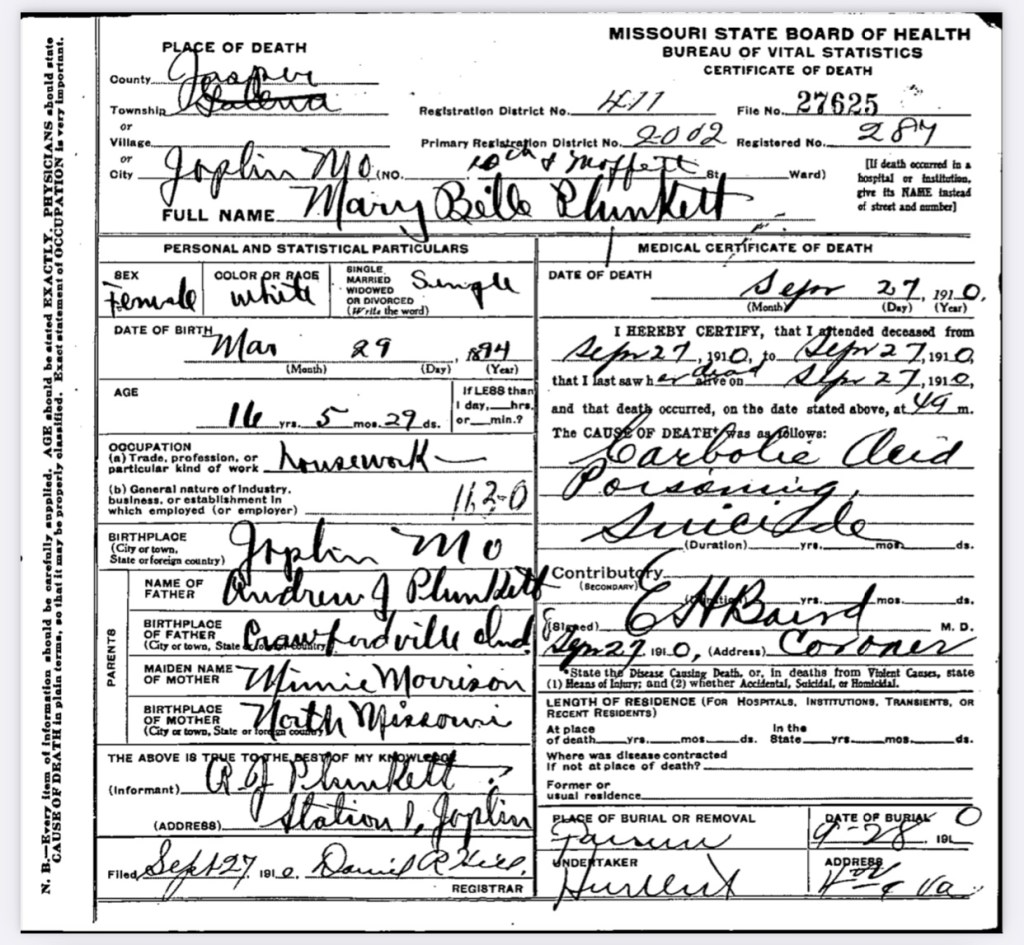
Mary Belle Plunkett, 16, died at 4AM at her home at 10th and Moffett of carbolic acid poisoning from committing suicide. She claimed she had no girl friends and felt alone.
Bessie Steddum and Mary Plunkett are buried very close to eachother in the same cemetery due to the close proximity to their deaths.
When we look back on it now we can see how these victims could have been spared. Knowing what we know now about mental health and treatment, but we have to look at it from a lens during their time period where women had to live under the constraints of strict gender roles and ultimately being dependent on their husbands all while coexisting with a less than through understanding of mental health.
I came across Maggie’s story reading about the Connor Hotel. Upon reading Maggie’s story I was not expecting to get so emotionally invested in her story – which suddenly, and unexpectedly became her family’s story.
** Content warning. This post contains graphic and detailed topics that might be disturbing to some. Discretion is advised. **
Maggie Wright Morgan lived in Neosho, MO for the majority of her life. Her mother was an Irish immigrant and her father was born in Ohio. She had one sister, Minnie, who died very young; aged 30 yrs. I can find little to no information about her sister, her cause of death, or any other details, but due to her age I would assume it was from disease or sudden illness. At Maggie’s time of death her death certificate listed ‘housewife’ as her occupation. She and her husband, David had a home in Neosho on what is now Hickory street. She and David did not have any children together, at least not that I could find documented.
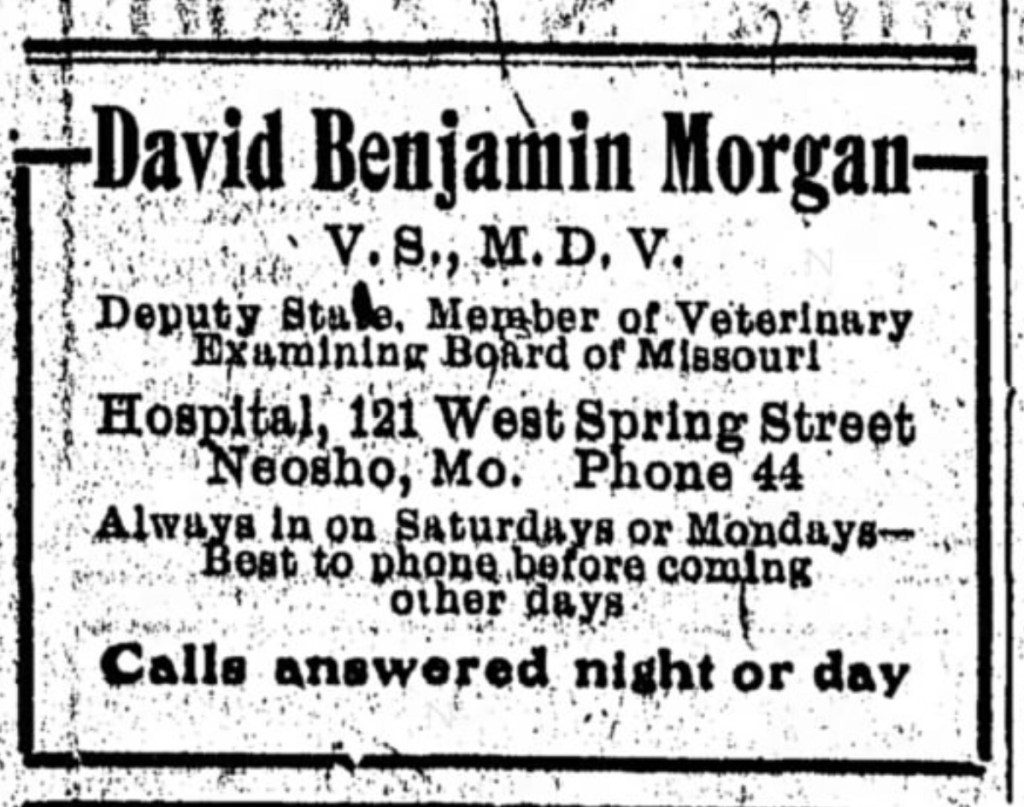
David Benjamin Morgan was born in 1864 in Wales. He immigrated with his father, Daniel, and family in 1871. He had two brothers and 4 sisters. The family settled in Osage City, KS. David would return to Wales to get his training in becoming a veterinarian when he was a young man. He travelled extensively – making strides all over America, Canada, multiple parts of Europe and even Mexico. David had crossed the Atlantic Ocean 17 times before he was 30 years old.
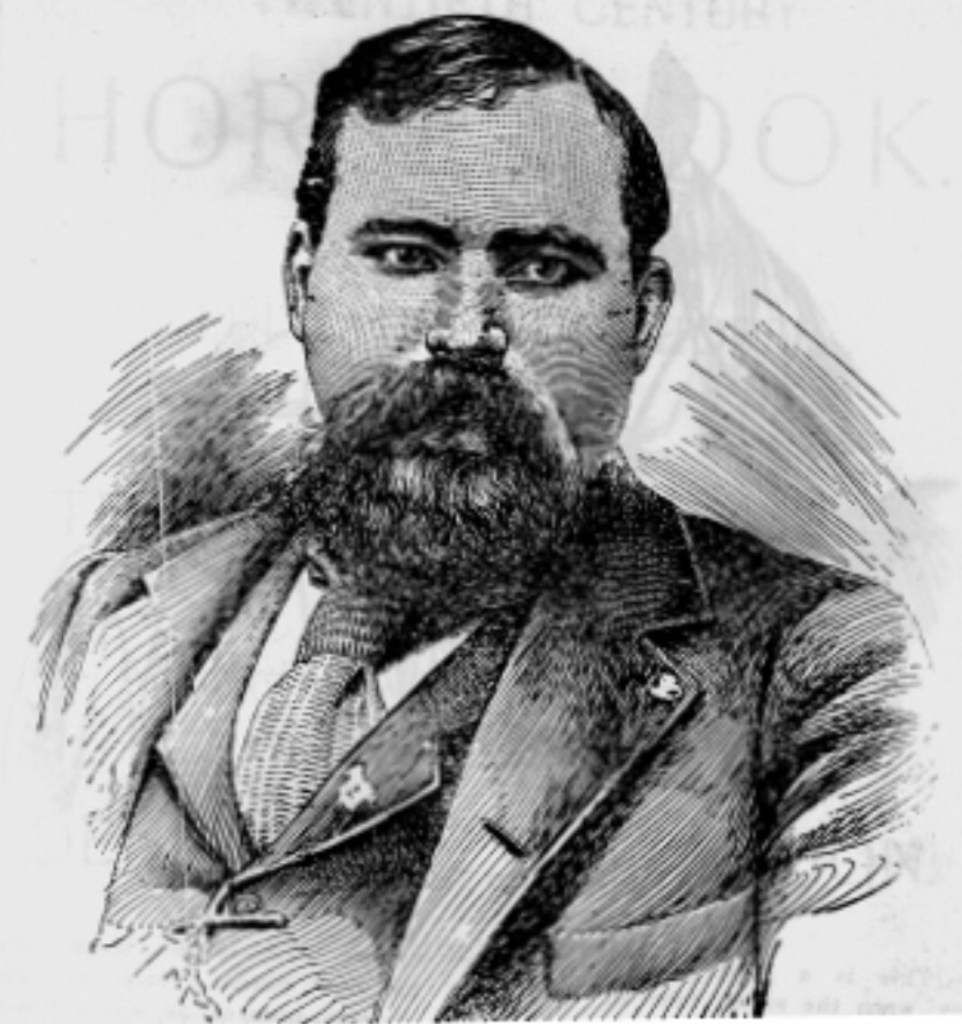
Mr. Morgan
For a short period of time he lived in Fayetteville, Ark in the early 1900’s. During this time he would travel locally and present lectures on animal diseases and general care for horses. He found himself in Neosho, MO quiet frequently as he could draw a large crowd there on a street corner. He would show up to these events with his own posse of horses. He had large white horses elegantly hitched to his wagon everywhere he would visit to deliver his lectures.
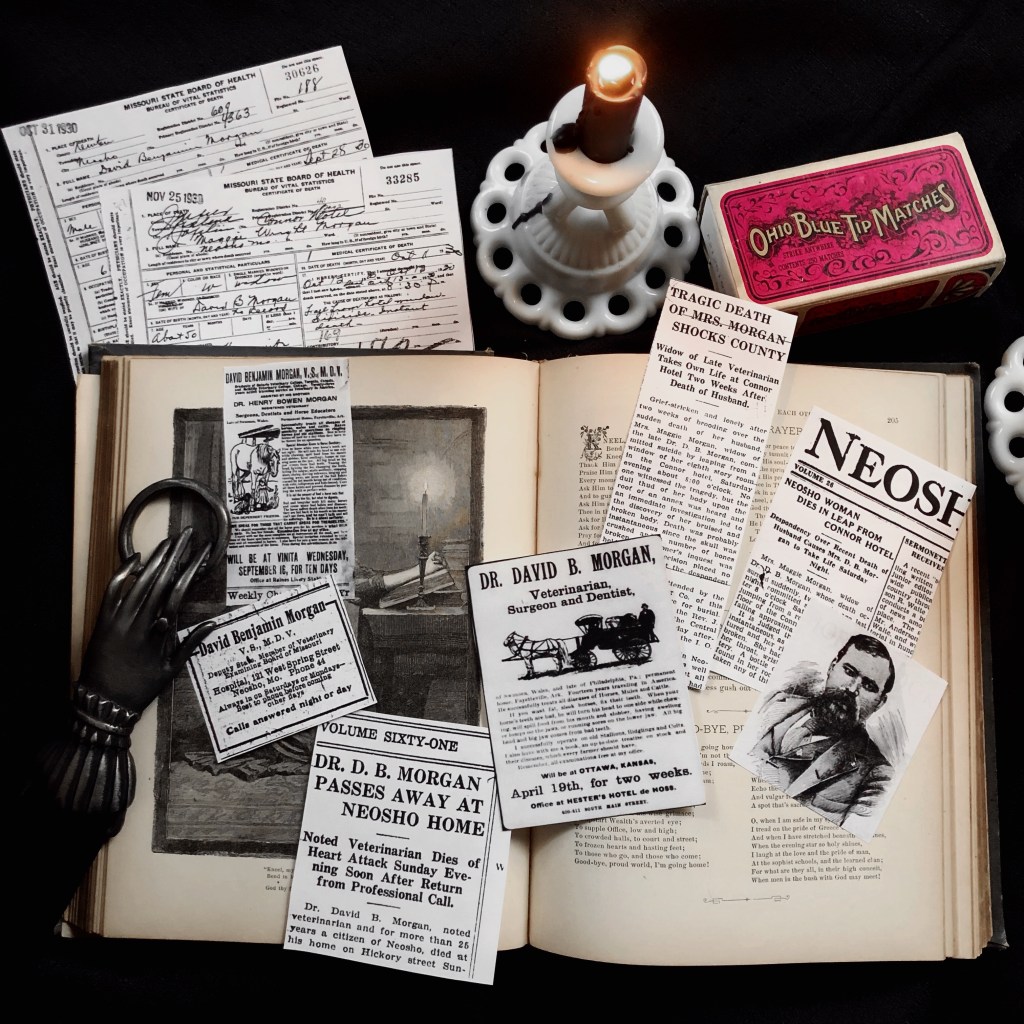
He met Maggie and they were wed in 1914. I do wonder the circumstances in which they met. Had she seen him at one of his lectures? Did a mutual friend introduce them? David had a veterinarian clinic in Neosho for 25 years at the time of his death. He wrote and published a book on horses and horse disease and was appointed many a great achievements for his studies and veterinarian care. With the later popularization of automobiles, David would shift his studies and focus to more domestic animals, such as hogs, cattle, dogs and other smaller domestic animals. Many people said his occupation was natural for him as he had a certain type of patience and kindness towards all animals. His clinic was located on what is now Spring street in Neosho. Tragically at one point the clinic suffered a fire – and the loss of Davids equipment was insurmountable.
Maggie and David had spent many a time frequenting the Connor Hotel as a couple – enjoying time to get away and to have a vacation. Maggie seemed to be completely devoted to David, traveling with him to all his lectures to support and possibly to look after him. When the couple returned from one of David’s lectures David fell very ill suddenly as they approached closer and closer home. They called the doctor to their home but it was too late. David died on September 28th, 1930 due to angina pectoris. He probably suffered from coronary heart disease and died right as they arrived home. This was a tragedy for the entire community as David was somewhat of a local celebrity and deeply loved – but it was an even worse tragedy for his wife Maggie.
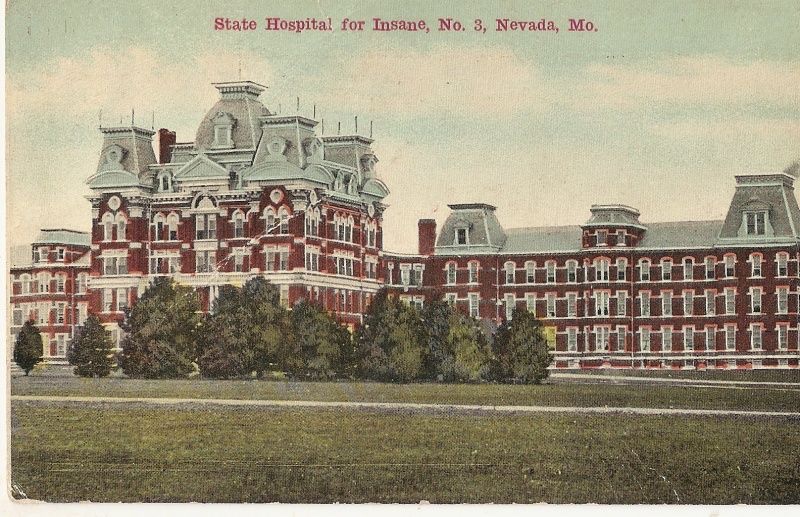
Maggie is harder for me to track. Both her parents died in the early to mid 1900’s – her father in 1916 and her mother in 1905. Maggies father, William, lived with mental illness for what I can gather for the majority of his adult life. In the late 1800’s he attempted to commit suicide after believing he was in the wrong after a land swindle. As a result of this in 1890 he would be sent to the Nevada asylum, which was constructed in 1887. He would be there for 15 years, later escaping in 1905. He spent 6 years after his escape wandering seemingly off the grid until he was sent to prison in Illinois and later was sent to an asylum in Illinois. Little was known of him after his escape in 1915. He sometimes lived with Maggie in Neosho but seemed to never stay in one place for too long. He died in 1916 of venous thrombosis in Florida – and his remains were sent to Neosho to be buried with his wife and other daughter.
Nevada State Hospital was built in 1887 in Nevada, MO and was the third mental institution in Missouri. The building remained operational until 1991. There is a small cemetery associated with the hospital where about 1,500 patients are buried, although the majority of the markers are missing or have been consumed by the earth. Recently there was a group trying to preserve the graves but I do not see where anything else has been done. While some people might get the impression that these people were (or are now) completely forgotten, at the time of their deaths this might not have necessarily been the case. Families were simply too poor to bury their own dead leaving them no choice but to have the state bury them for free.
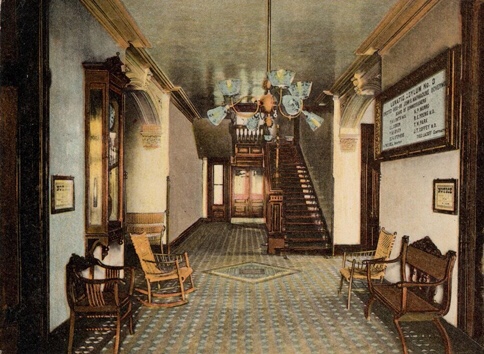
Inside the Nevada State Asylum
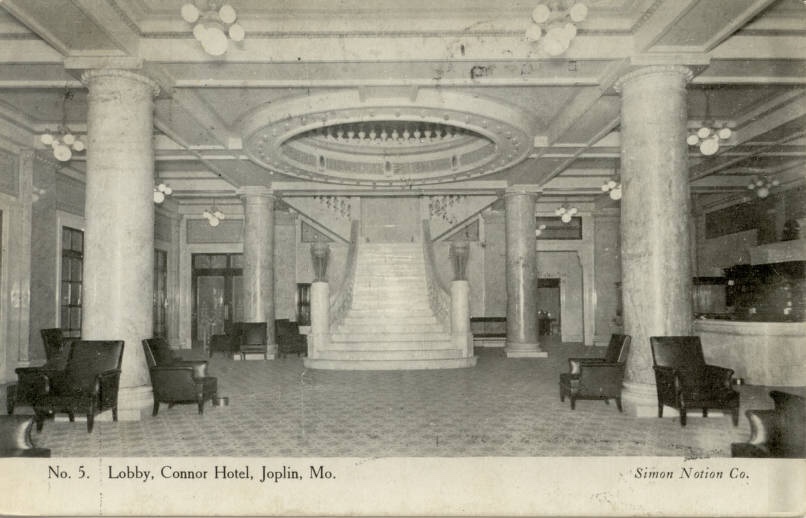
After David’s death in 1930 Maggie was beside herself with grief. Even before her husbands death she had made attempts to take her own life. I think she was suffering before David’s death, but even more so after. On October 11th 1930 Maggie had rented a room at the Connor Hotel – probably remembering all the good times she once had there with her husband. Some say she ordered a chocolate malt, drank it, then leaped from her 8th floor hotel room. Others say she had slit her throat and wrists before she leaped. The coroner ruled her death a suicide and the cause of death was from a ‘fall from hotel window – suicide attempt.’ She left no suicide note but left a note behind indicating that she wanted David’s siblings to have their property. At the time of Maggie’s death all her family was already dead. There was no one left to look after things. This could be why Maggie chose to end her life at the Connor – because she knew her body would be found. The majority of David’s siblings did not live locally, at least by the standards back then. At the time her husbands funeral Maggie made sure everyone knew she ‘wanted a coffin just like her husbands,’ and wanted the same preacher. It would only be a few weeks later that people would know what she meant.
If you have read my story on Mabel Harrington then you also know that she ended her life at the Connor Hotel and, coincidentally, like Maggie, on the 8th floor.
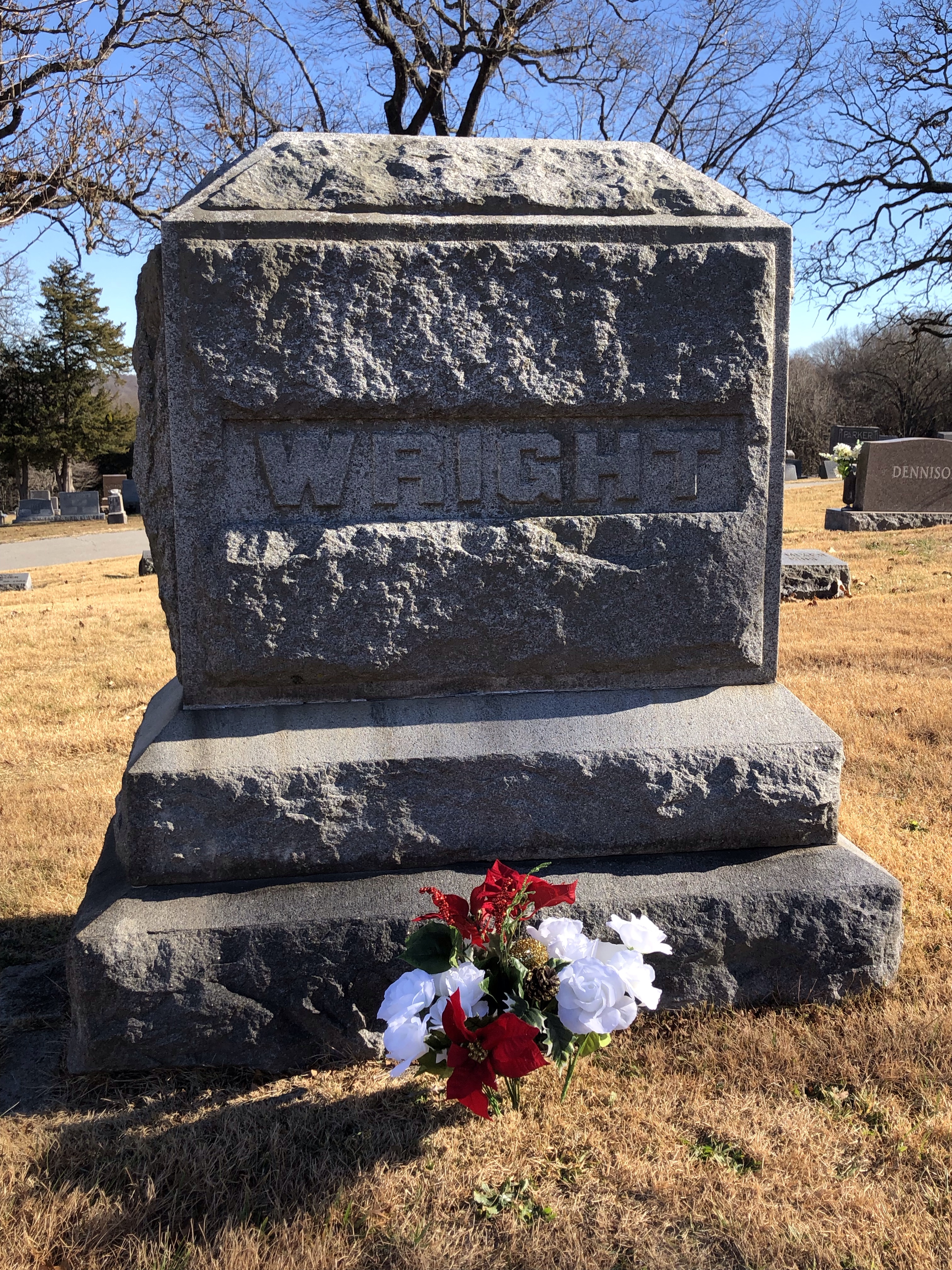
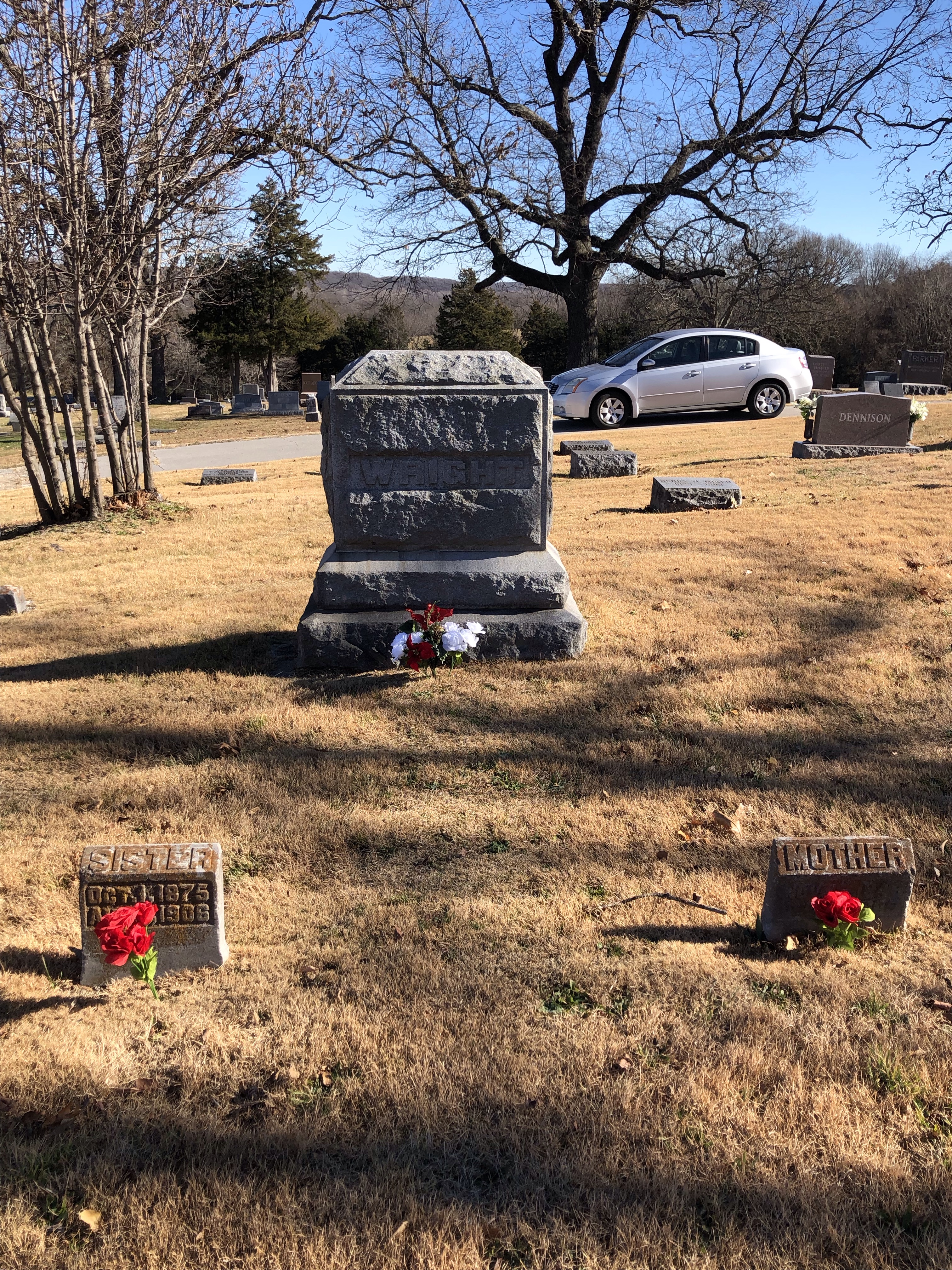
While I was able to easily find graves for Maggies sister Minnie and her mother, the others were more difficult to find. I visited the cemetery thinking I would be able to solve the mystery – but it proved much more difficult. I found no indication of where David or Maggie were placed. I felt very uneasy about this, as I wanted to honor them by placing flowers at their grave. It always surprises me how someone can be so loved and cherished by their community, such as David, but somehow does not even had a headstone. It is unfortunate, and leaves unopened about questions about the events that happened after their deaths. I started the process of finding them. I reached out to the city of Neosho and asked if anyone would be able to help me locate them. As you can imagine, cemetery records over the years have been dislocated, misplaced or remain in many different formats. The IOOF cemetery has been managed under different people and associations that record keeping is still being updated or archived. Thankfully, I was able to find an answer. Maggie Wright was listed as owning a plot – which I was told indicated she owned 8 graves in total. I compared the cemetery map and her plot was located where her mother and sister were buried. If only two graves where marked on the plot then who were the other 6? Maggie, David and Maggies father – who all according to their death certificates were buried at the same cemetery. With Maggies fathers past I began to wonder where he was truly buried. I also read that Maggie was buried next to her husband in her obituary. That would be a total of 5 burials at the plot. I imagine the others were purchased for Davids siblings, or possibly if Maggie or David would have had children. It could have been an entire plot the family purchased for whoever might have needed it – long before anyone had passed away. Once I had my answer I returned to the cemetery again, and this time carefully placed flowers – 5 each – for each person buried at the site.





 familiar apparitions