** Content warning. This post contains graphic and detailed topics about suicide and death that might be disturbing or triggering to some. Discretion is advised. **
In 1865 Joseph Lister successfully used carbolic acid as a disinfectant to treat wounds and disinfect instruments and other materials during and after medical procedures. This dramatically reduced the amount of patients who would develop gangrene or infection as a result. Before this discovery, the acid was poured into sewers and rivers to reduce foul smells during ‘The Great Stink’ in July of 1858 in London. The warm temperatures of the summer and the untreated human waste caused an increase in a foul smell along the banks of the river Thames. This inspired Lister who believed the acid had germ killing capabilities.

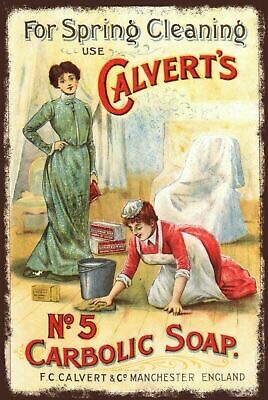
In Victorian times up to the 20th century carbolic acid became a household cleaner. From soaps to mixtures you would dilute yourself to clean floors our laundry – it was easily accessible from any druggist and relatively cheap making it accessible to all classes of people. The discovery of carbolic acid saved many lives in terms of preventing infection of disease, but the easy accessibility led to an increase of accidental poisoning and suicides caused by the chemical. It also caused intense skin damage on surgeons hands and was harmful when inhaled for long periods of time during medical procedures to ‘clean’ the air.
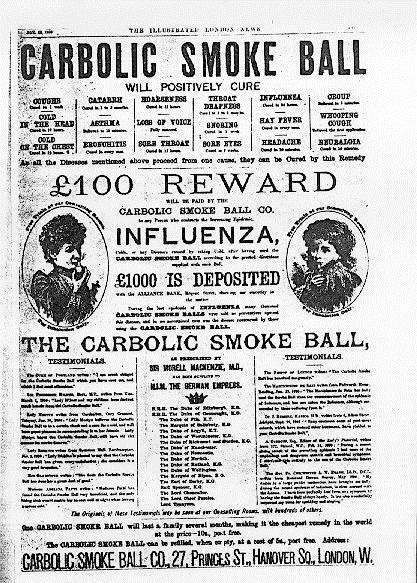
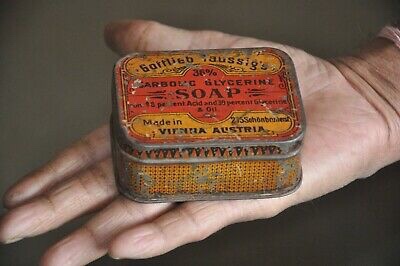
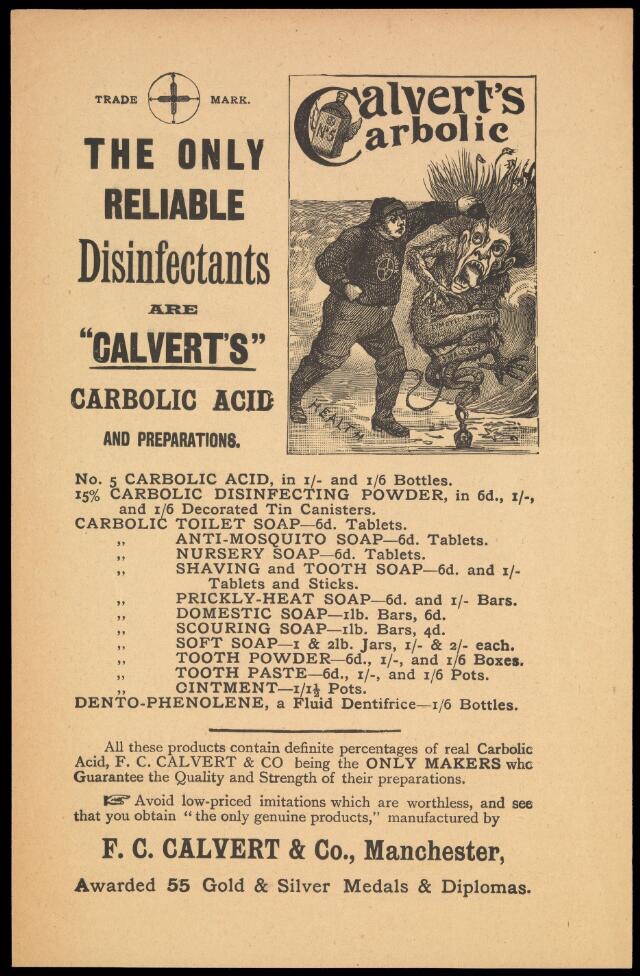

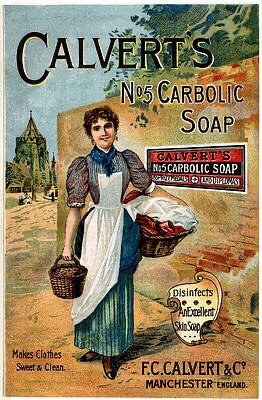
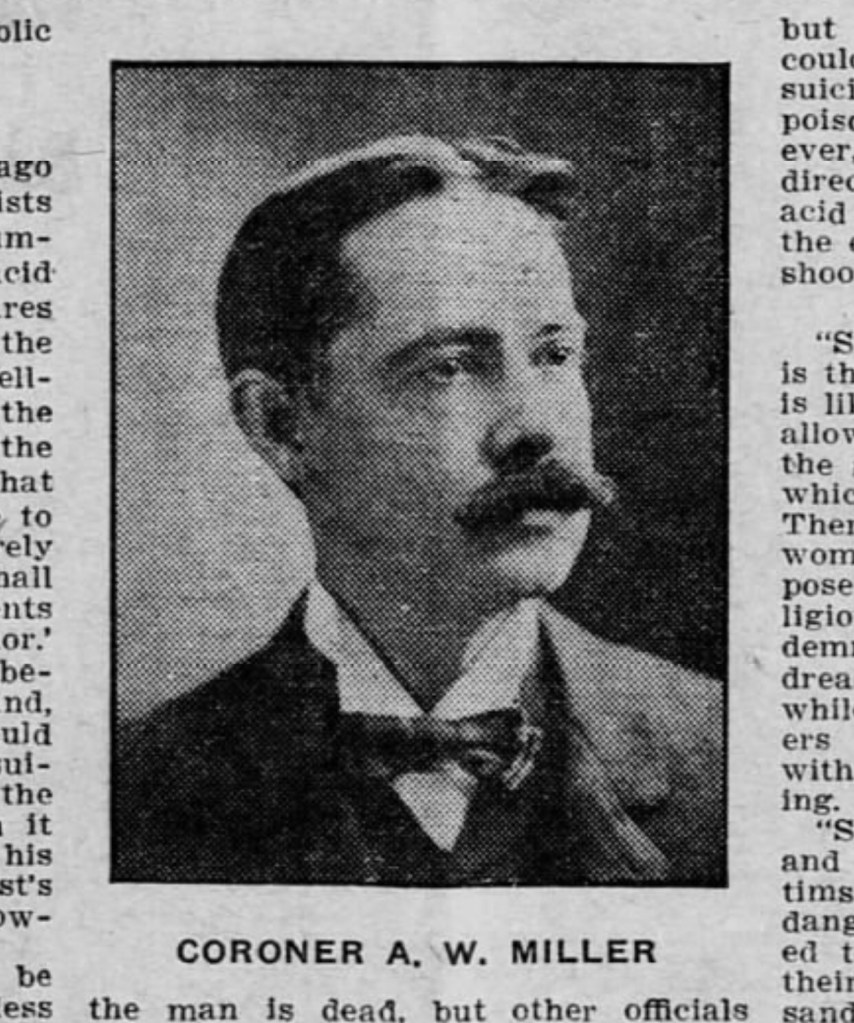
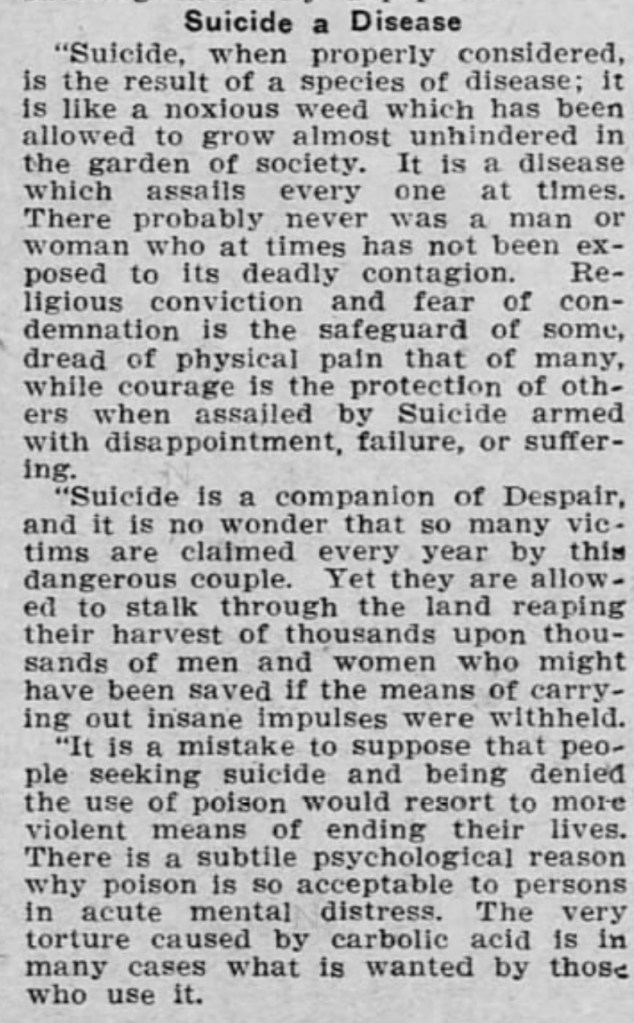
In 1904 an article posted in the Saint Paul Globe (Minnesota) by Coroner A. W. Miller urged concerns claiming carbolic acid was the ‘favorite poison of the despondent ones.’ The town of St. Paul recorded 100 suicides in one year, with half of them being from carbolic acid – either by accidental ingestion or from suicidal intent. Miller commented, ‘If a equal number of deaths was caused by any other agency a general alarm would be sounded, but somehow, no matter how many lives are lost through suicide, no attention is attached. The people who die by carbolic acid are as valuable to the community as those who are victims of white plague, for instance, but no action is taken by the public authorities to check the evil.’ A law was eventually put in place that druggists had to register anyone who purchased the substance and had to ask them what their intentions were with it. They believed this was a way to keep the druggist ‘in check’ for any deaths caused by the chemical. Miller believed that if in the moment of the despondent if they could not obtain the poison they would be given a ‘second chance’ and would decide to not follow through, also believing that even one barrier between the despondent and the poison would help. For the time period it seemed Miller had a reasonable understanding of suicide, depression and those suffering – and seemed to be feeling an immense sense of empathy for those in his community who died as a result from the poison. He wanted regulations put in place.
The same year, Joplin (Missouri) city Marshall John A. McManamy had a statement about the poison within the community stating that the majority of those who used this method were white women who ‘had fallen from the highest place of moral standing. They are not successful.’ Carbolic acid was agonizing, and if not taken correctly or in a correct amount you could suffer for days in agonizing pain before finally succumbing. For those that survived the poisoning recovering was terrifying and could leave people with long term complications. When taken ‘correctly’ the poison would leave the victim dead minutes later, but sometimes taking up to 1 -2 hours for death to come. It wasn’t until the 1920s that carbolic acid was regulated at a better rate.
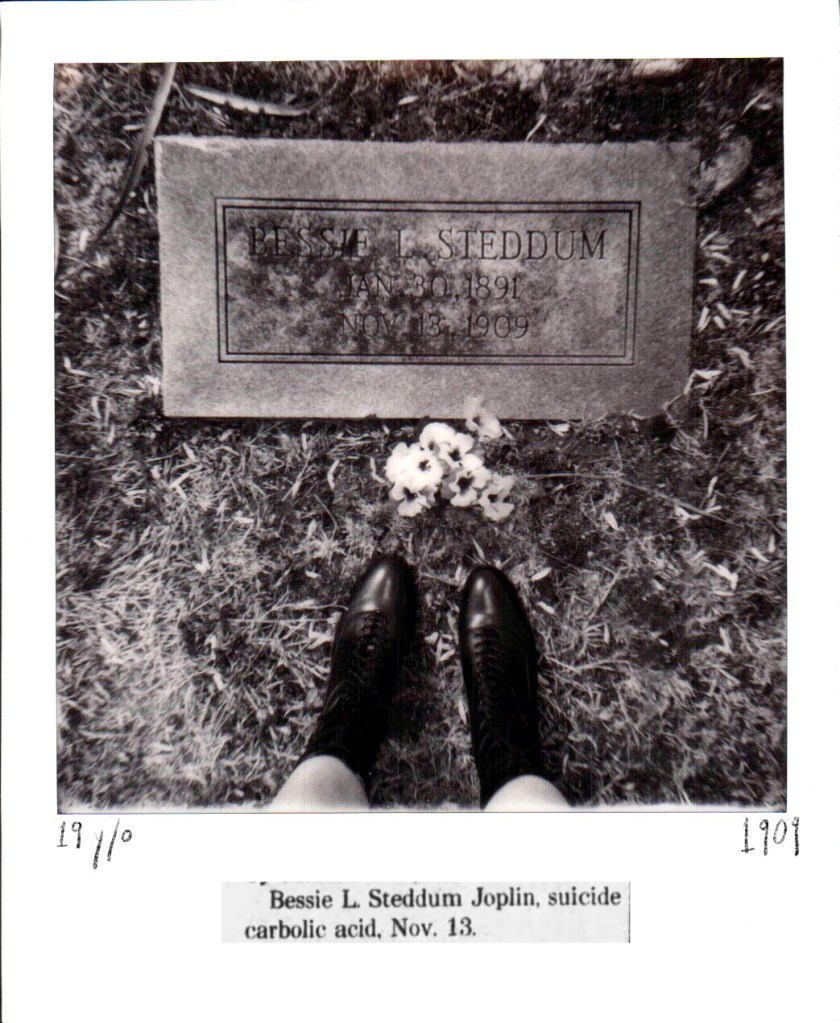
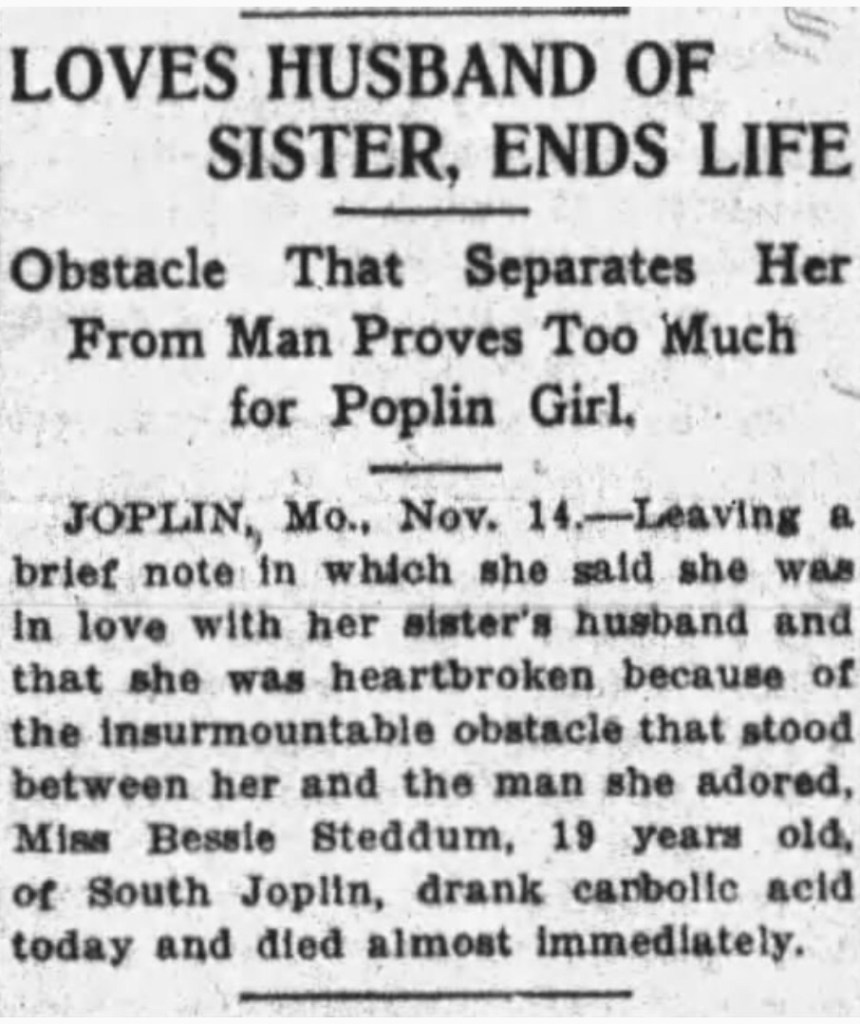
‘Bessie Steddum, 19 years old of south Joplin drank carbolic acid today and died almost immediately.’ She was in love with her sisters husband.
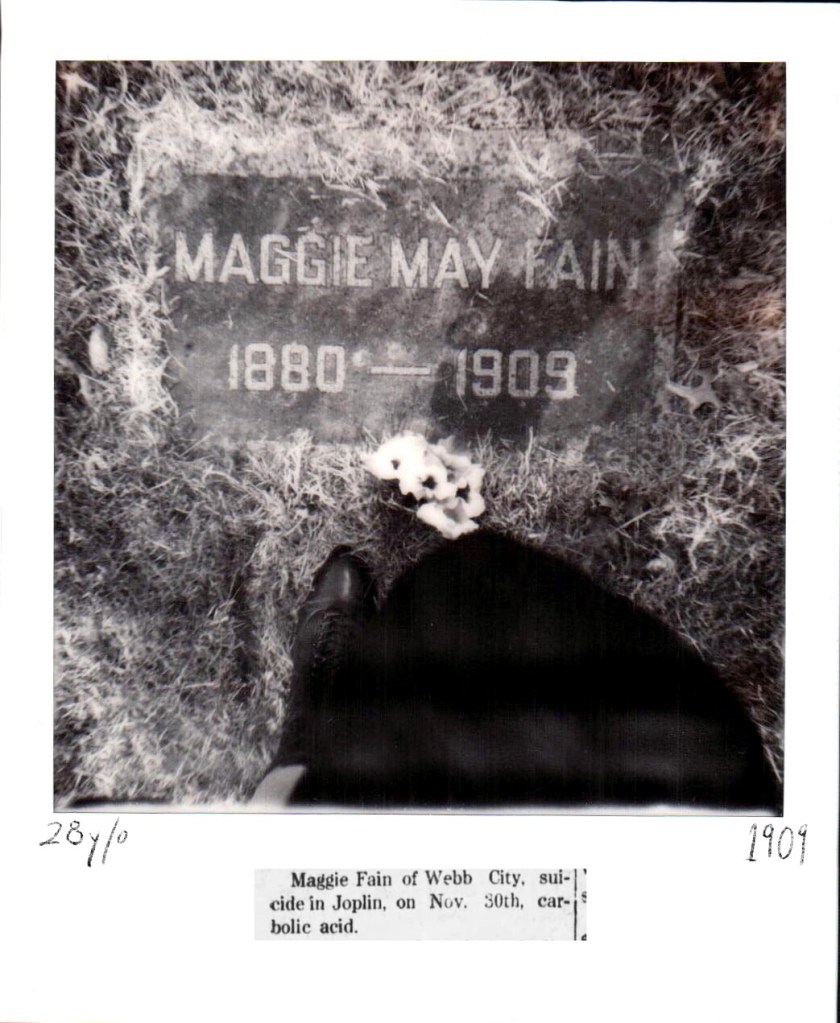
‘Maggie Fain of Webb City, suicide in Joplin on Nov 30th, carbolic acid.’ No other info is known. Motive unknown.
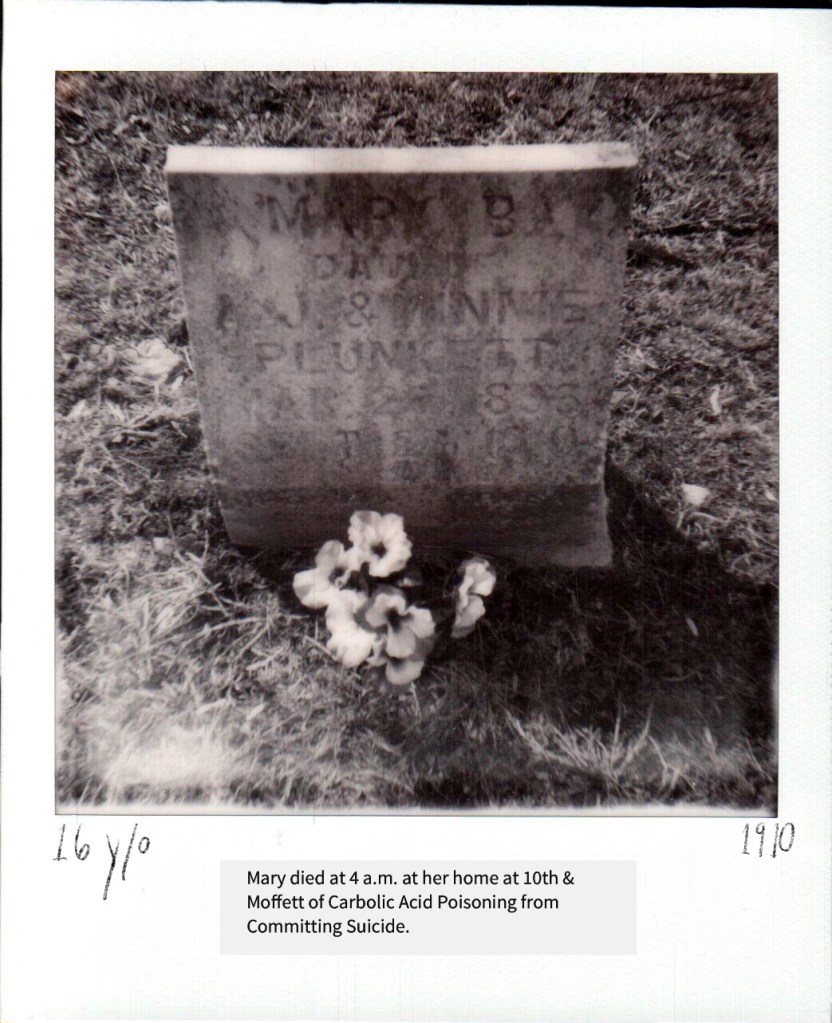
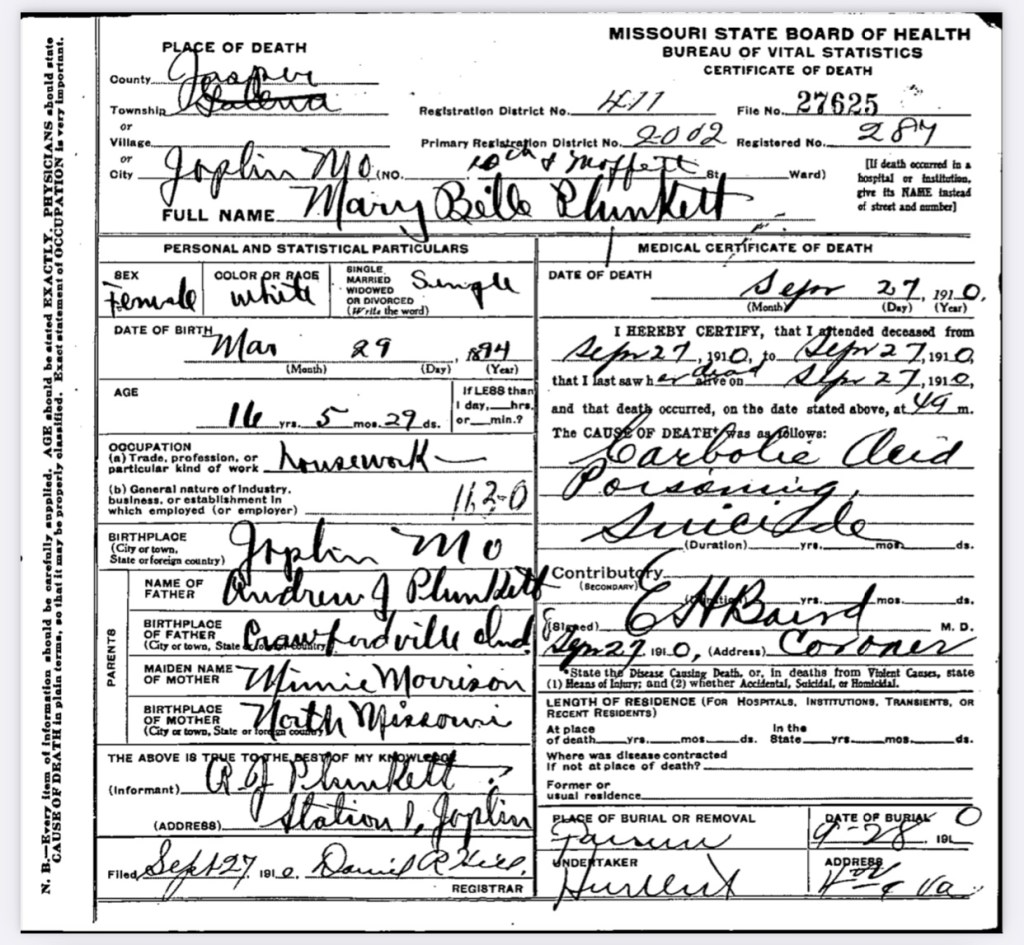
Mary Belle Plunkett, 16, died at 4AM at her home at 10th and Moffett of carbolic acid poisoning from committing suicide. She claimed she had no girl friends and felt alone.
Bessie Steddum and Mary Plunkett are buried very close to eachother in the same cemetery due to the close proximity to their deaths.
When we look back on it now we can see how these victims could have been spared. Knowing what we know now about mental health and treatment, but we have to look at it from a lens during their time period where women had to live under the constraints of strict gender roles and ultimately being dependent on their husbands all while coexisting with a less than through understanding of mental health.

 familiar apparitions